By KidsDirect Editorial Team
Foods That Can Cause Allergic Reactions in Babies
If you grew up hearing that babies should stay away from peanut butter, eggs, and nuts for the first year, you’re in good company. That was the standard advice for years, and many parents still hear it from grandparents and friends. Here’s the twist. Research has turned that advice on its head. Doctors now say that putting off these foods doesn’t protect your baby, and for some foods, offering them early may actually lower the chance of an allergy. Here’s what’s changed, what hasn’t, and how to do it safely.
The Foods Behind Most Allergic Reactions
Nine foods cause about 90 percent of food allergy reactions. They’re milk, eggs, peanuts, tree nuts, soy, wheat, fish, shellfish, and sesame. According to the Allergy and Asthma Network, allergies to milk, egg, wheat, and soy often fade as kids grow. Peanut and tree nut allergies usually stick around for life. Any food can cause a reaction in a particular child, but these nine are the ones to know.
What About Chocolate, Beans, Corn, and Citrus
You may have seen these on older lists of problem foods. They aren’t among the major allergens. Chocolate is worth a label check, since many chocolate products contain milk or traces of nuts, and those are the real concern. Beans and corn aren’t on the list either, though any food can bother an individual baby.
Citrus fruit is a common source of confusion. Oranges, tomatoes, and strawberries are acidic, and the juice can irritate the skin around your baby’s mouth and chin. That red patch looks alarming, but it’s usually irritation rather than an allergy. A true allergic reaction tends to show up within a couple of hours and can bring hives, swelling, or other symptoms beyond the spot the food touched, as Medical News Today explains.
Should You Avoid These Foods in the First Year
No. The American Academy of Pediatrics says that there’s no benefit to delaying allergenic foods. Once your baby is ready for solids, usually around 6 months, you can start working in foods like egg, peanut products, yogurt and other dairy, wheat, sesame, soy, fish, and shellfish. Most doctors suggest beginning with simple, low allergy foods and adding the common allergens gradually.
Some babies need a little more care. Under guidelines from the National Institute of Allergy and Infectious Diseases, babies fall into three groups. A baby with severe eczema or an egg allergy has the highest risk. That baby may do best trying peanut products as early as 4 to 6 months, but only after your pediatrician has checked first, often with a blood or skin test. A baby with mild to moderate eczema can usually try peanut foods at home around 6 months. A baby with no eczema and no food allergies can have peanut foods along with other solids around 6 months, with no special steps.
What about a family history of allergies? It does raise your baby’s odds, so it’s a good reason to bring it up with your pediatrician before you start. It’s not a reason to wait.
How to Introduce Allergenic Foods Safely
Start with a small amount of one new food at a time, so you can tell what’s causing any reaction. Choose a time when you’re able to watch your baby, not right before a long nap or a car ride. Shape and texture matter as much as the food itself. Whole nuts and spoonfuls of peanut butter are choking hazards, so skip them. Instead, the AAP suggests stirring a small amount of peanut butter into cereal, pureed fruit, or yogurt, or thinning it with breast milk or formula.
Once your baby is ready to feed themselves, our guide to finger foods for babies covers safe shapes, sizes, and choking hazards. Once your baby has had a food without trouble, keep it in the rotation. Regular, age appropriate servings seem to matter for keeping the protection in place. If you’re still sorting out when to begin, our guide to feeding solid foods walks through readiness and first foods, and our list of foods babies should avoid covers choking hazards. Dairy needs one extra note. Yogurt and cheese can be part of your baby’s first foods, but plain cow’s milk as a drink should wait until after the first birthday.
Signs of an Allergic Reaction
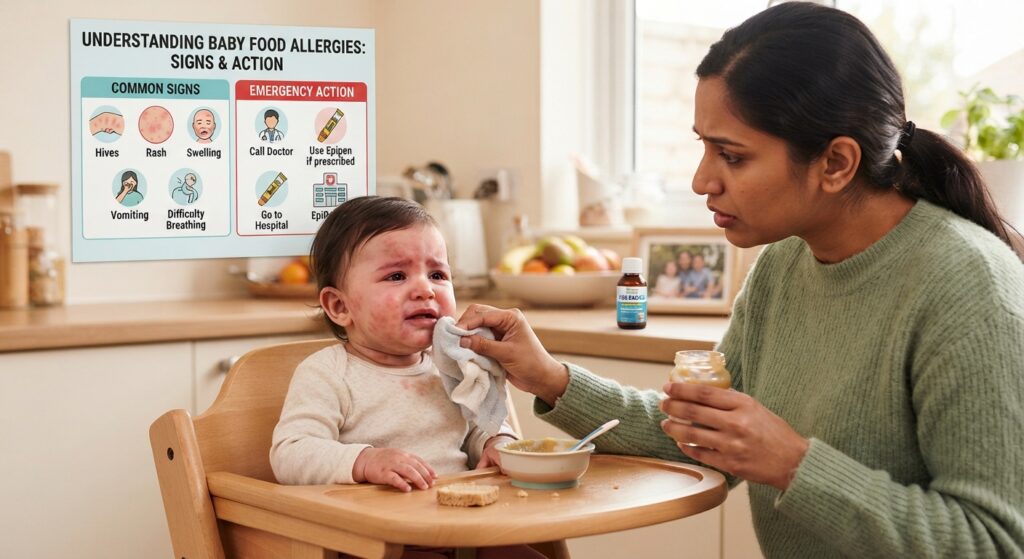
Mild reactions often involve one part of the body. You might see a few hives, itchy skin, an itchy nose, an upset stomach, or your baby sticking out their tongue or licking their lips over and over. Severe reactions involve more than one part of the body. Watch for many hives, swelling of the face or lips, wheezing or coughing, repeated vomiting, pale or bluish skin, or sudden extreme sleepiness. Those are signs of anaphylaxis, which is an emergency. Call 911 right away. Epinephrine is the only medicine proven to stop it.
Some reactions are slower and quieter. If your baby has diarrhea, a rash, or vomiting after a new food, call your pediatrician, even if it seems mild. Keep a note of what your baby ate and when the symptoms started. It helps your doctor figure out what’s going on.
Cow’s Milk Allergy in Babies
Cow’s milk is one of the most common food allergies in infants, especially when allergies run in the family. It can show up with fussiness, spit up, loose stools that may contain blood, hives, or a stubborn rash. If you suspect it, don’t switch formulas or cut dairy from your own diet on your own. Talk with your pediatrician first. The good news is that many children outgrow a milk allergy.
Worth knowing. This page is general guidance and can’t replace advice from your baby’s doctor, who knows your family’s history. For more help with feeding and everyday baby care, browse our BabiesDirect section.