By KidsDirect Editorial Team
Finger Foods for Babies
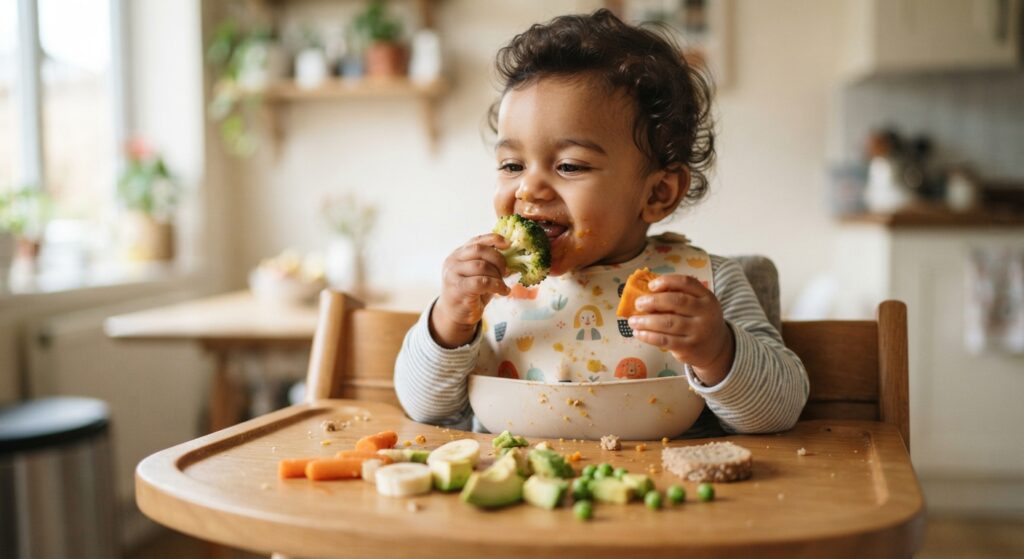
Around the time your baby starts snatching crackers off your plate, it’s time for finger foods. It’s messy, it’s adorable, and it’s a big step. Feeding themselves builds fine motor skills, helps babies learn how different foods feel, and gives them a say in mealtime. It also comes with a few safety rules worth knowing. Here’s how to get started.
When Is Your Baby Ready
There’s no single magic birthday. Most babies are ready for soft finger foods somewhere around 8 or 9 months, and some start sooner. The Centers for Disease Control and Prevention points to a few signs of readiness for solid foods in general. Your baby sits up alone or with support, controls their head and neck, opens their mouth when you offer food, and brings objects to their mouth. By about 9 months, most babies can pick up small bits between thumb and finger, which makes picking up soft pieces much easier. If your baby isn’t there yet, keep offering mashed and lumpy foods and try again in a few weeks.
Good First Finger Foods
Aim for foods that are soft, easy to mash between your gums, and cut small. Great starters in the grain group include crackers that dissolve easily, round toasted oat cereal, and well cooked pasta bits. Plain rice cakes can be hard for little ones, so pick the kind that melts in the mouth. And since the CDC suggests offering a mix of grains such as oat, barley, and wheat, rather than leaning only on rice, vary what you serve.
For fruit, try ripe banana, soft pear, or fruit cooked until it’s tender, such as apple. Cooked vegetables work well too. Think halved peas, finely chopped squash, and soft potato or carrot. A good test is whether you can squish a piece easily between your fingers. For protein and dairy, tiny bits of cheese, finely shredded chicken, flaked fish, and well cooked egg are all good options. Remove any bones, skin, and fat first, and check fish carefully for stray bones.
Foods to Avoid
You may have heard that certain foods are off the menu until your baby has molars. The truth is more cautious than that. Molars help, but they don’t make the risk go away. Babies and toddlers have small airways and are still learning to chew, so some foods stay risky for years. Safety guidelines like those from the national Caring for Our Children standards treat these as choking hazards for children under 4.
The usual suspects include raw, hard vegetables such as carrot and celery sticks, whole grapes and other round fruits, raisins and other dried fruit, chunks of hot dog or other meat, and whole nuts. Popcorn, hard candy, and lollipops belong on the list too. Spoonfuls of peanut butter are another one, since a sticky glob can lodge in the throat. Thin it out or spread it very thinly instead. Raw apple pieces are a risk as well, which is why cooking or grating them is the safer route.
How to Prepare Foods Safely
Size and shape matter as much as the food itself. For infants, many experts advise cutting food into pieces about a quarter of an inch or smaller. The CDC recommends cutting round foods like grapes into small pieces. It also says to slice long, cylindrical foods like hot dogs, sausage, and string cheese into short, thin strips instead of coins, since a round coin can plug the airway. Cook vegetables and fruit until they’re easy to mash. If a food is hard or raw, grate it, cook it, or save it for later.
Gagging Versus Choking
Here’s something that helps parents stay calm. Some coughing and gagging is normal while babies learn new textures. It’s loud, it can look scary, and it’s your baby’s built in way of moving food out of reach of the airway. Choking is different. It’s usually quiet. A choking baby can’t cough, cry, or breathe. If that happens, act right away and call 911. It’s well worth taking an infant first aid and CPR class before you start finger foods so you know what to do.
Mealtime Habits That Keep Babies Safe
Always sit your baby upright in a high chair, and stay close and watch every bite. Offer small portions so there’s less to stuff into a little mouth. Skip finger foods in the car or while your baby is crawling around, and don’t let older siblings slip your baby foods from the avoid list. With these habits in place, you can relax and enjoy the show.
Worth knowing. Every baby develops at their own pace. If you’re unsure whether yours is ready, ask your pediatrician, and see our guide to feeding solid foods for the signs of readiness. Wondering about peanut, egg, or other common allergens? Read our guide to foods that can cause allergic reactions in babies before you start. For more on feeding and everyday baby care, browse our BabiesDirect section.