By Dr. Kalman Heller, Child and Family Psychologist
Why I’m Starting With a Story About Exercise Injuries
Sports medicine researchers have been tracking a real pattern for years now, a steady rise in injuries among adults in their 30s, 40s, and 50s who work out or play sports hard, often called the weekend warrior pattern. Now you may wonder why that’s the lead for an article about reducing stress in children. Follow me for a minute. Some of that rise probably just reflects more people committing to being active, which is a good thing. But there’s also a real sense that plenty of these adults are pushing themselves too hard. Does “no pain, no gain” ring a bell? Any trainer will tell you that hurting your body isn’t required, or even helpful, for getting healthier. For a lot of adults, exercise has quietly become an obsession, even a competition with their peers, and one more significant time commitment layered onto lives that are already overcommitted.
We Don’t Actually Know What Our Kids Are Capable Of
These adults are today’s parents, mostly Millennials, a genuinely sophisticated, well-informed generation. This is showcased by how to reduce stress in children. They often tell me they only ask their kids to give it their best try, and that they don’t criticize achievement unless they think their child is slacking off. Do I hear the dreaded word “underachiever” hiding inside that parentspeak? How do we actually know what our children are capable of? More importantly, plenty of kids don’t show their real capacity for achievement until they’re well out of school and into the real world, where their actual interests and personal strengths finally find a place to land.
Kids Copy What You Do, Not What You Say
But this is a genuinely driven generation of parents. Whatever they say to their kids, what they model is often something quite different. Children respond far more to what a parent does than to what a parent says. So a parent who tells their child that top grades aren’t the most important thing, while living a life driven to achieve the max in every direction, is modeling exactly the opposite message. That’s where the injury connection comes back in. This generation has a real pattern of pushing itself to extremes, run a little faster, lift a little more, and that striving tends to bleed straight into their parenting style. It shows up as early, chronic worry over whether their kids are being as successful as possible, and as overbooking kids into so many activities that there’s no one left to just play with after school.
Why This Generation Feels It So Intensely
None of this anxiety is new to parenting. But for Millennial parents, the most highly educated generation in American history, raising kids in the wake of a few decades of exceptional achievement by the generations before them, these particular worries have become nearly universal. Parents naturally want their children’s lives to turn out better than their own, but that gets harder to pull off with each generation that’s already achieved a lot. It’s not surprising that such a highly educated group carries a special obsession with college and grades, often loading kids into extracurricular activities specifically to build a stronger college application. There’s a persistent myth running underneath all of it, that a more selective college guarantees a better life. The research doesn’t actually back that up.
We Say Family Matters, But We Don’t Act Like It
These anxieties, about a parent’s own goals and their children’s goals, get transmitted to kids in all kinds of ways, and the result has been an increasingly stressed out generation of children. There’s no single formal dataset that proves this, but the shared impression among people who work with kids is that anxiety and depression have climbed significantly. The sad part is that a lot of this is avoidable. The real problem is that parents have their stated values right but their actual behavior misplaced. Ask parents what matters most and almost everyone says “family.” But less and less time actually goes toward nurturing marital and parent-child relationships.
What the Research Actually Says Predicts a Good Life
Research on secure attachment, meaning intimate, trusting relationships, keeps demonstrating that those attachments are the real foundation of a happy, healthy, successful life. Harvard’s decades-long study of adult development has shown that happily married couples are physically healthier and tend to live longer. We also know that couples in high conflict have a real negative impact on their kids. And we have strong data showing that young children with more secure attachments to their caregivers grow up less anxious and more independent. Yes, real dependence and intimacy actually give young children, and adults, the confidence to be independent.
One Secure Relationship Can Be Enough
There’s also a growing body of research showing that the strongest protection against serious problems in adolescence is a genuinely close relationship with at least one parent. Studies on resilience in children point to the same thing again and again, a secure relationship with an adult figure as the key factor. One striking example, in research on Israeli preschoolers during the Scud missile attacks of the Gulf War, the children least affected by that trauma were the ones with the most secure parent-child relationships.
Keep Your Priorities Straight This Year
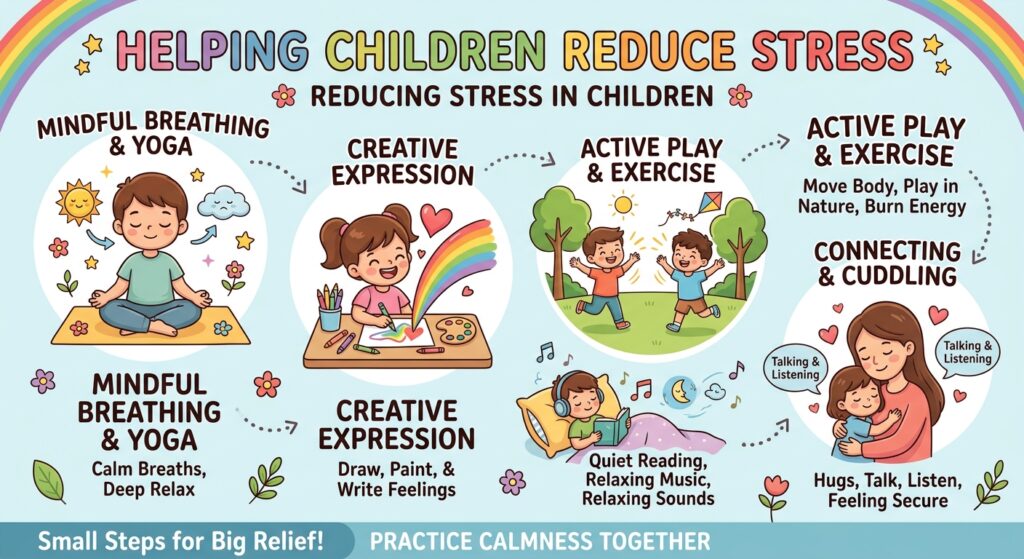
As another school year kicks off and parents everywhere gear up for the usual fights over grades, homework, and athletic or artistic achievement, the project of raising “adult children” before their time, the real challenge is holding onto the right priorities. It’s the relationships that matter most. You can meaningfully lower your child’s stress, and your own, by enjoying your kids regardless of their level of achievement or how they stack up against their peers. Don’t fixate on how they’re going to turn out, because life isn’t linear, and your children will take a winding path to adulthood, not a straight one. Spend more time actually getting to know your child, and let her get to know you too. That means planning real one-on-one time and being ready to give your full, undivided attention when he reaches out to you. Doing that, instead of making sure the homework’s done and the room is clean, is what actually makes you a more positive influence on your kids, and gives you a less stressed out child in return.