By Pat Sonnenstuhl, Certified Nurse Midwife
Making the Right Choice
Why Your Provider Choice Matters
If you’re thinking about becoming pregnant, or you already are, finding a provider who gives you good prenatal care is one of the most important decisions you’ll make. Early and consistent prenatal care makes a real difference for your health and your baby’s, and picking a provider before you even conceive can be a smart way to get ahead of it. There are a variety of obstetrical providers out there, so the goal is finding one who meets your need for safe, competent care while paying attention to what matters most to you. How to choose a prenatal care provider is of the most important things one can do.
That choice matters more than ever right now. Recent CDC data shows the share of women starting prenatal care in their first trimester has actually dropped in recent years, falling to about 75.5 percent in 2024 after years of improvement, while the share getting late or no prenatal care at all has climbed. Lining up the right provider early is one of the simplest ways to make sure you don’t become part of that trend.
Know Your Options
Each type of provider has different qualifications, depending on what state you’re in and where you plan to give birth. Your options generally include an OB/GYN, a family practice physician, a certified nurse midwife or certified professional midwife, a physician’s assistant, and sometimes a nurse practitioner. Look into what’s available in your community and interview the providers you’re considering. Many women also choose to bring in a doula to support them through labor.
Already Have a Provider? When to Look Elsewhere
If you’ve relocated, changed insurance plans, or just don’t feel comfortable with your current obstetrical provider, it’s completely reasonable to look for a new one. Ask other pregnant women, new mothers, and friends who they’d recommend, meet with a few candidates, and go with the one you feel most at ease with.
Here at KidsDirect, we’ve put together some guidelines to help you through that process.
Three Things to Ask Before You Book a Consultation
How much will a consultation appointment cost? When you make the appointment, ask about the price up front. Providers usually set aside 10 to 15 minutes for an initial consultation, and if your conversation runs longer (up to half an hour), you may end up with an additional fee.
Where does your provider deliver babies? Find out which hospital or out of hospital setting your provider uses, and who their backup provider is if they’re not available. Ask whether the hospital has a birth center, whether it’s family and child friendly, and what kind of relationship your provider has there. Some people find it easier to pick the hospital first and then find a provider who delivers there.
What paperwork do you need to handle? Once you’ve made your choice, call your previous provider and ask them to send your medical records to your new one. Your new provider needs your full medical history, and you’ll also want to confirm your insurance is accepted. Taking care of this early saves a lot of last minute stress.
Questions to Ask at Your Consultation
Background
- How long has this provider been in practice, and what do they enjoy most about working with pregnant patients?
- How quickly can you reach them in a non emergency situation?
- How would you reach them in an emergency?
Group or Solo Practice
- If they’re part of a group, how often will you see the other providers, and will you get a chance to meet them ahead of time? What percentage of their own patients do they personally deliver?
- If they practice solo, who covers for them when they’re away?
Typical Pregnancy Care
- Which tests does the provider routinely perform, and how do they handle any concerns you might have about a specific test?
- If you’re considering a midwife, ask who she consults with in an emergency or if a condition develops outside her scope of practice. Ask about her training, credentials, and licensure, whether she’s affiliated with a specific physician group or hospital, and whether she has hospital privileges.
- How experienced is the provider with high risk pregnancies, such as twins, gestational diabetes, or hypertension, and who would they bring in if your pregnancy became high risk?
- Does the provider support vaginal birth after cesarean, and what’s their general approach to VBACs and cesareans? Ask whether they recommend a childbirth class, and if so, which one.
Labor, Birth, and Postpartum
- When does the provider, or their backup, typically meet a patient in labor at the hospital?
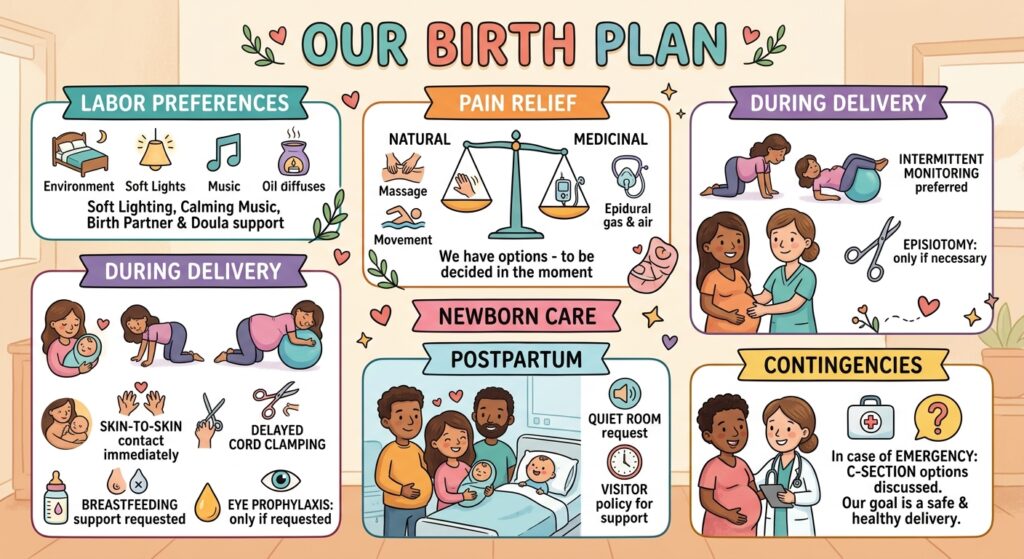
- If you’d like to use a doula, ask whether they have suggestions or enjoy working alongside one.
- What does the provider recommend for managing pain during labor?
- What procedures do they routinely perform during labor, such as fetal monitoring, IVs, or episiotomies? Is there anything you’d rather skip, and how would they handle that?
Touring the Hospital
- What happens right after your baby is born? Will you be separated, and if so, for how long?
- Can the baby stay in your room with you? Can your partner stay too?
- Are there any special services for new moms?
- Are lactation consultants or other professionals available to answer breastfeeding questions?
The Bottom Line
Don’t worry about asking too many or too few questions, and don’t feel silly about any of them. The only bad question is the one you never ask. Getting real answers helps you figure out whether this provider is the right match for you, and gives you the confidence to trust that choice once labor day arrives. If you want a second opinion, sites like this OB/GYN interview guide cover a lot of the same ground and can help you round out your list of questions.
Sore after having your baby? Click here to find out how to ease the discomfort.