KidsDirect

Pertussis

Pertussis Vaccine

By KidsDirect Editorial Team

Pertussis is a bacterial infection most parents know by its nickname, whooping cough. It gets that name from the sharp gasping sound a person makes while gasping for breath after a coughing fit. Adults and older kids usually shake it off after a rough few weeks. Babies don’t get off nearly that easy.

What Is Whooping Cough?

Whooping cough spreads easily through coughing and sneezing. It starts out looking a lot like an ordinary cold. Runny nose, mild cough, maybe a low fever. The trouble shows up a week or two later. That’s when the cough turns into sudden, violent fits that can leave a person gasping for air. Babies younger than a year old can have it worse. It can cause pauses in breathing without much coughing at all, and that’s part of what makes it so dangerous at that age.

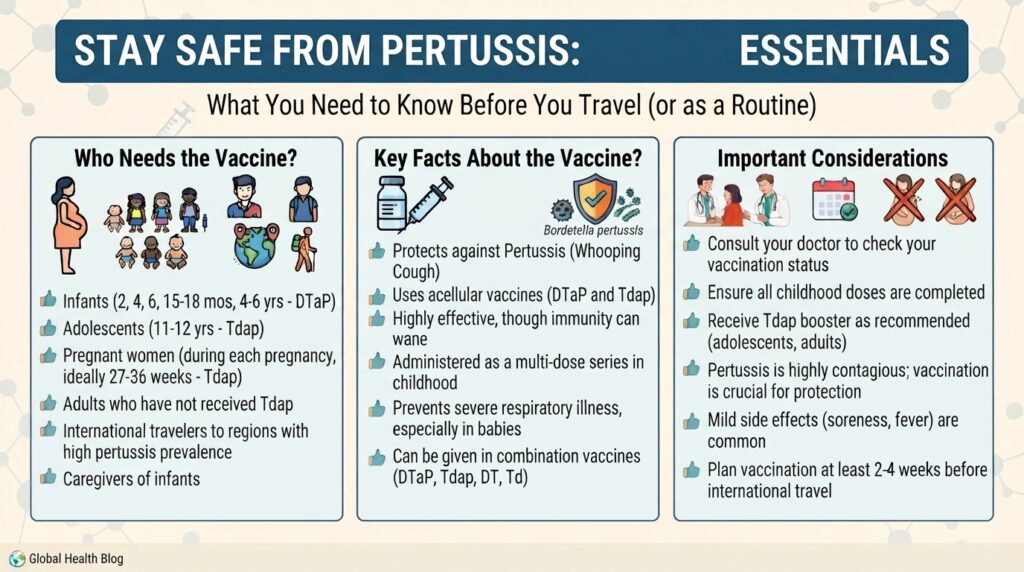
Infants can’t finish their first round of vaccine doses until they’re several months old. That leaves a real window early on where they’re exposed but not yet protected. Pregnant women get a booster during every pregnancy for exactly this reason. Some of that protection passes to the baby before birth.

The Vaccine Schedule

Young children get pertussis protection through DTaP, a combination shot that also covers diphtheria and tetanus. The usual schedule runs at 2, 4, and 6 months. Additional doses follow at 15 through 18 months and again at 4 through 6 years.

Protection has usually faded some by the preteen years. A booster called Tdap is recommended around that point, typically age 11 or 12. Doctors also recommend a Tdap dose during each pregnancy, regardless of when the last one was given. That’s what protects a newborn during those first vulnerable months.

Possible Side Effects

Most kids handle DTaP and Tdap just fine. Soreness where the shot went in, mild fever, fussiness, and low energy are the most common reactions. They usually clear up within a day or two. Serious reactions are rare. A few are worth a call to the doctor though, including a high fever over 105 degrees, a seizure, or crying that goes on for three hours straight.

Whooping cough cases still show up in the United States every year, often in communities where vaccination rates have dipped. Staying current on the DTaP and Tdap schedule is one of the more direct ways to keep a household’s youngest member protected. That protection matters most during the exact months they’re most at risk. For more on how this fits into the bigger picture, take a look at our guide on vaccines in general. Or head back to the full vaccine timeline.
Related Posts

HPV Vaccine
Vaccines
admin

HPV

By KidsDirect Editorial Team The HPV vaccine tends to catch parents off guard the first time a pediatrician brings it up, mostly because of the timing. Starting it around age 11 or 12 feels early for something tied to a sexually transmitted virus. The logic is actually pretty simple once you see it. This vaccine works best when it’s given

Read More »
Rotavirus Vaccine
Vaccines
admin

Rotavirus

By KidsDirect Editorial Team Almost every kid gets a stomach bug at some point, but rotavirus is a different animal in infants. It can cause days of watery diarrhea and vomiting severe enough to land a baby in the hospital with dehydration. Before the vaccine existed, that was a routine story in pediatric emergency rooms every winter. What Is Rotavirus?

Read More »
Polio Vaccine
Vaccines
admin

Polio

By KidsDirect Editorial Team Polio used to be one of the most feared diseases in the country. It’s the kind that filled hospital wards with kids in iron lungs. Most parents today have never seen a case, and that’s not an accident. It’s the direct result of decades of vaccination. That’s exactly why the vaccine is still part of the

Read More »
High School Senior Studying
High School
KidsDirect Editorial Team

The High School Senior Year: A Parent’s Guide

By KidsDirect Editorial Team Junior year was about carrying a heavier load. Senior year is about carrying it to the finish line, and then handing most of it over. There’s real relief in that, for you and your teen both. There’s also a strange kind of pressure that shows up right when everyone expects things to ease up. Applications, financial

Read More »
high school sophomore year
High School
KidsDirect Editorial Team

The High School Sophomore Year: A Parent’s Guide

By KidsDirect Editorial Team Freshman year is loud. Everyone talks about the new building, the older kids, the adjustment. Sophomore year is quieter, and that’s exactly what makes it sneaky. Nobody warns you about tenth grade the way they warn you about ninth. But this is often the year a teen either settles into who they’re becoming. Or they start

Read More »
The High School Junior Year: A Parent's Guide
Family
KidsDirect Editorial Team

The High School Junior Year: A Parent’s Guide

By KidsDirect Editorial Team Freshman year was about adjusting. Sophomore year was about finding a footing. Junior year is different. This is the one where several big things land in the same twelve months. Harder classes, the PSAT, a driver’s license, maybe a first job, and the start of an actual college search. None of it waits for the others

Read More »