By KidsDirect Editorial Team
12 Tips to Help Your Disorganized Child Stay on Track
If your child struggles with planning, gets impulsive, or just can’t seem to keep their stuff together, you’re not alone, and there’s a lot you can do to help. Kids who
struggle with organization usually aren’t being lazy or careless. They often just haven’t built the systems yet that make staying on top of things automatic. These twelve tips can help build those systems, for your child and for your own patience. These are tips for disorganized child.
Set a Homework Schedule
Break homework into set chunks of time, quarter hour or half hour blocks work well. That keeps your child fresh instead of grinding through the same assignment until they’re bored and checked out. Figure out together which assignments are due soonest and tackle those first.
Make Lists a Habit
Get your child into the habit of writing things down, homework, chores, or stuff they need for school the next day. A small notebook that fits in a pocket or backpack works better than a phone for younger kids who are still building the habit.
Prepare the Night Before
Walk through tomorrow with your child before bed. Lay out their clothes and pack the school bag ahead of time. It saves you both from those mornings spent hunting for a missing shoe or a bus pass while everyone’s already running late.
Set Up a Homework Spot
Give your child one consistent place to do homework, whether that’s a desk or just a clear flat surface anywhere in the house. It doesn’t have to be their bedroom. Keep it stocked with pens and pencils so they’re not stopping every five minutes to go hunt for a working pen.
Leave Notes
If your child reads well enough, simple written reminders can do a lot of the nagging for you. “Bring your water bottle down” or “Dirty clothes go in the hamper” land a lot softer on paper than said out loud for the third time.
Keep Things Cataloged
Box files, ring binders, or folders give schoolwork and magazines an actual home. Encourage your child to put things back in the same spot so they can find them again next time without a full search.
Provide Storage
Wire baskets, plastic crates, or shoe boxes give toys and belongings somewhere to live besides the floor. Hooks behind the bedroom door work well for clothes too, so they’re not just piling up in a corner.
Clear Out the Clutter
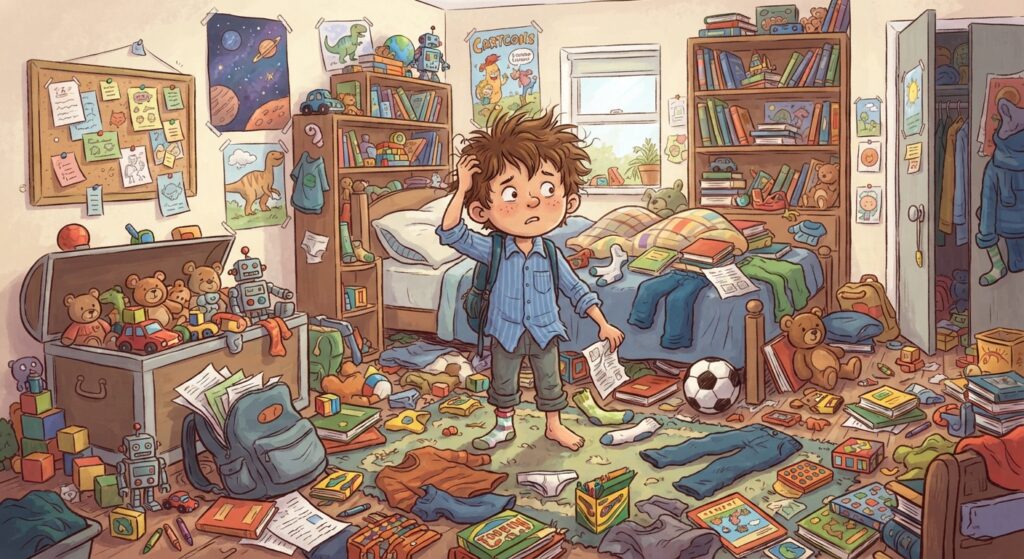
Kids like this often end up with bedrooms that look like they were ransacked. Once a week, run a “mining session.” Dump the drawers, or the whole floor, onto some newspaper. Sort out the useful stuff, the Lego pieces and pens that still work, and toss what’s left straight into the trash. It sounds harsh, but it keeps the mess from snowballing.
Keep Mealtimes and Bedtimes Consistent
Try to keep meals and bedtime around the same time every day. Predictable routines help kids feel secure, since they know roughly what’s coming next.
Use a Family Calendar
Keep one shared calendar for commitments, birthdays, and anything else the family needs to track. A wall calendar or planner your child can actually see is often more useful than a digital one buried in an app they never open.
Use Gentle Reminders
Help your child build checklists and post them somewhere they’ll actually see them. Gently remind them to check their calendar rather than nagging. Small, repeated reminders build the habit faster than one big lecture does, and
consistent, low key strategies at home tend to work better long term than pressure does.
Encourage and Reward Effort
Let your child help you with your own chores sometimes, and notice out loud when they’ve made a real effort to keep things tidy. A little recognition goes a long way toward getting them to try again next time, even if the result isn’t perfect.