By Dr. Kalman Heller, Child and Family Psychologist
The After-School Ritual
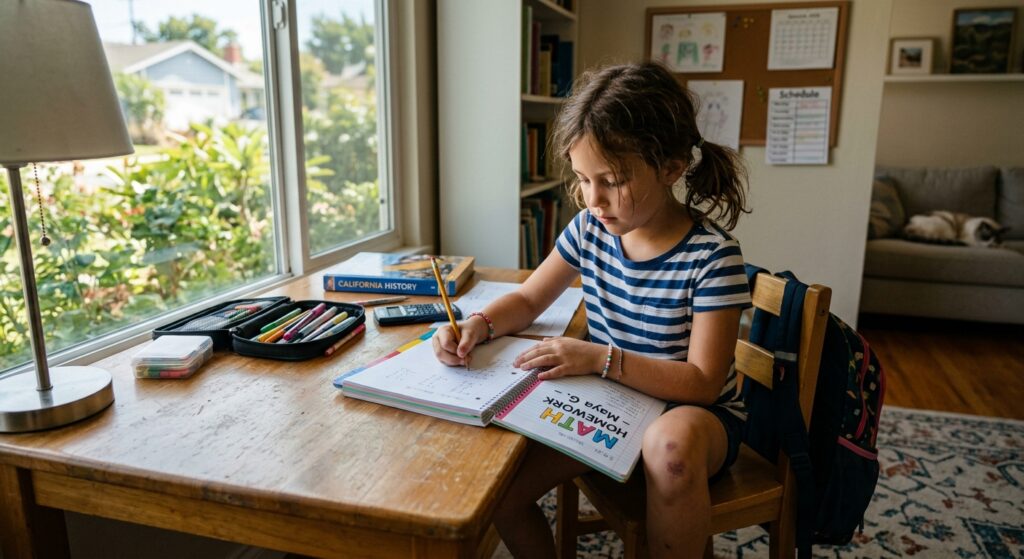
The ritual usually starts with the first after-school sighting of a child by a parent. “How much homework do you have?” Should parents help with homework? Eventually comes the inevitable “Have you done your homework?” For a lot of parents, a real chunk of every evening goes to assisting, checking, or arguing about homework. Time with our kids is so limited and so precious. Is this really how it should be spent? No.
What Parents Are Actually Responsible For
What is a parent’s actual responsibility when it comes to a child’s homework? Much less than most parents assume. You’ve heard the basics before, provide a reasonable workspace (which, for most kids, can be almost any spot where they can actually get schoolwork done) and make sure there’s some quiet, reasonably consistent “work time” built into each child’s schedule. Most parents already try to do this, but it’s mostly wasted advice, because for kids who aren’t getting homework done well or consistently, time and place are almost never the real issue.
Show Interest Without Taking Over
Helping with homework is also supposed to be how parents show interest in a child’s schoolwork. You can do that far more effectively by talking with your child about what they’re actually learning, and by modeling the value of learning in your own life and in things you do together. “What are you covering in Social Studies these days?” beats a question that’s really just about grades and assignments. Doing a project around the house that involves learning some new skill or bit of knowledge is a great way to model the value of education while building a genuinely positive parent-child bond. Letting your child teach YOU something, about computers, music, or whales, works just as well to reinforce that knowledge itself is worth having.
It’s Not Your Contract
Let’s get to the core problem. Homework is really a contract between the teacher and the student. Unless a teacher has specifically brought you in, like the classic elementary school pattern of quizzing your child on spelling words every Thursday night, it isn’t your contract. We want kids to learn responsibility. We want teachers to help kids learn. When parents get too involved pushing homework or reviewing and correcting it, the results are rarely good. You damage your relationship with your child and lose time you could have spent simply enjoying each other, which matters more in the long run than any given assignment. Some kids won’t do the work specifically because they’re angry at you, because they’ve learned to rely on you to make them do it, or because it’s become their way of getting your attention. None of that actually helps your child.
Let the Teacher See the Real Work
Correcting homework so your child turns in something neat and error-free just leads the teacher to believe the child already understands the material or has developed the responsibility to do it independently. It’s far more useful to let your child turn in sloppy work, wrong answers, or nothing at all, so the teacher actually knows what your child can do. From there, it should be the teacher’s job to apply consequences that motivate the child and to teach whatever skills are missing. If something specific is genuinely interfering with a child’s ability to learn or do the work, the teacher needs to partner with you to solve it. But that’s not the situation for most kids.
Too Much of a Good Thing, Especially in the Early Grades
It’s also worth admitting that a lot of homework is rote and boring. After a full day of schoolwork, assignments need some novelty and real interest to compete with the more engaging things a child could be doing instead. I think homework has become too much of a bad thing, especially at the elementary level. I call it that because most of that work really belongs in school, where teachers can catch misunderstandings quickly and let the kids who’ve already got it move on to something else. The research backs this up to a point. Harris Cooper’s well known research synthesis found a real link between homework and achievement in secondary school, but a much weaker one in elementary school, where younger kids often struggle to focus and haven’t yet developed real study habits.
Family Life Has Changed, Homework Hasn’t
Schools generally haven’t adjusted to how family life has changed. Today’s typical family has both parents working, or the parents live in separate homes. Kids and parents need more chances to spend time together just having fun. Parents are stretched thin and stressed out, which is another reason homework so often becomes a flash point. Plenty of kids have an evening visit with a parent they don’t see daily, and homework becomes one more thing to squeeze into an already hectic, emotionally loaded, all-too-brief visit.
When Time Is Tight, Choose Connection
When parents have limited time with a child and have to choose between helping with homework and doing something fun, I tell them to do something fun. Encourage your child to get the work done before time with Mom or Dad if possible. Set a time limit for homework, and whatever’s done when time’s up is done, period. Teachers will tell you roughly how much time they expect a child to spend on any given assignment. There’s no strong evidence that more homework predicts broader success in life, and we tend to overvalue academic markers generally. The idea that where a child goes to college determines how their life turns out doesn’t hold up well either. Research comparing students who could have attended more selective colleges found that for most, later earnings looked similar whether they went to the elite school or not. The millions families spend on private schooling in hopes of guaranteeing a good outcome mostly buy peace of mind, not a guarantee.
What School Doesn’t Teach
School doesn’t teach resilience, or love, or most of the personal qualities that the real world actually demands for success at work or in relationships. School doesn’t build the parent-child bond your children will lean on when they’re facing the bigger challenges of real life, years after school has faded into the background. So my recommendation stands. Homework should be a school-based issue, not a parental one. You have your own things to teach your child and share with your child. Don’t be the homework police.