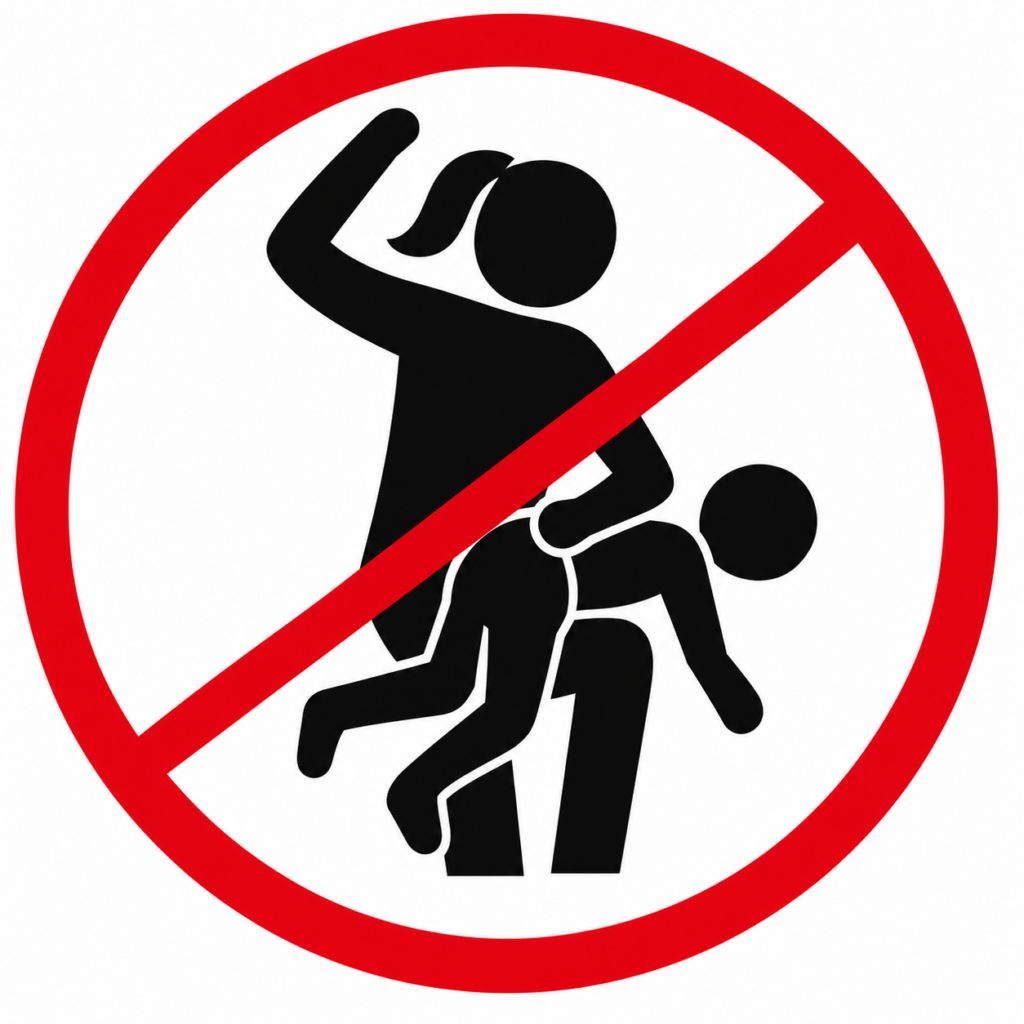
Is Spanking Harmful to Children?

Short answer, yes. The American Academy of Pediatrics reviewed decades of research and landed on a clear position.

Parents and caregivers should never spank, hit, slap, or shame a child as a form of discipline. That’s not one doctor’s opinion, it’s the official policy of the largest pediatric organization in the country.

It wasn’t always this settled. Back in the 1990s and early 2000s, a well known developmental psychologist named Dr. Diana Baumrind ran one of the more thorough studies on the topic, and it complicated the picture for a while. She was responding to a real methodological problem, the fact that two things being correlated doesn’t prove one causes the other. Kids who get spanked more also tend to show more aggression later, but that alone doesn’t tell you spanking caused the aggression. It could be that harder to manage kids draw more spanking in the first place, which is closer to what Baumrind’s data actually suggested once she accounted for temperament.

Her conclusion at the time was that mild, occasional spanking, used alongside other discipline and never rising to abuse, didn’t show clear harm in her sample of middle class families. For years, that research got cited as a reason spanking might be fine in moderation.

Since then, the evidence base has grown a lot, and it points the other way. Larger, longer running studies have tracked outcomes for thousands of kids, not hundreds, and the pattern holds up even after controlling for the same factors Baumrind raised. That’s what pushed the American Academy of Pediatrics to update its official policy and state plainly that parents and caregivers must never use spanking, hitting, slapping, or verbal shaming.Do not spank your children
Why Spanking Fails

  • It only stops bad behavior for a short time.
  • It teaches children that hitting is an acceptable way to solve problems.
  • It’s linked to higher rates of anxiety, depression, and long-term aggression.

Positive Alternatives

  • Positive reinforcement. Praise children when they behave well.
  • Clear limits. Set firm, fair rules ahead of time.
  • Redirection. Guide the child toward a different, acceptable activity.
  • Time-outs. Remove the child briefly from a stimulating environment to calm down.

If you want real scripts for using these in the moment, not just the theory, our article Do You Spank Your Children? walks through exactly what to say and do instead, from a parent educator who works with families on this every day.

A few more places worth reading if you want to go deeper. NPR covered the policy update well when it came out. Nemours KidsHealth has a solid overview of healthy discipline strategies. And the Cleveland Clinic lays out the clinical reasoning in plain language.

Parenting is hard, and nobody gets it perfect. If you’re working through other tough moments with your kids, you’ll find more of our parenting articles here. If you’ve spanked before, that doesn’t make you a bad parent, it just means there’s a better tool sitting right there waiting to be used instead.

Related Posts

Returning to School
Teens
Kalman Heller

Questions about Parenting Teenagers

By Dr. Kalman Heller, Child and Family Psychologist When “I Want to Get Into a Top College” Doesn’t Match the Effort Q: Our 16 year old daughter says she wants to get into a top college, but she doesn’t take her homework seriously, complains that it’s boring, and ends up with lower grades because of missing or low-quality assignments. We

Read More »
red cross help
Teens
Kalman Heller

The Afternoons of Quiet Young Teens

By Dr. Kalman Heller, Child and Family Psychologist If Parenting Young Teens Is Hard, Imagine Being One We all know how challenging it is to parent a 13 to 15 year old. That alone should tell us it’s equally challenging to actually be one. Jonathan is starting high school. He’s not especially athletic and not an above-average student. He has

Read More »
Teens
Kalman Heller

Adolescent Tragedies and my Teenager

By Dr. Kalman Heller, Child and Family Psychologist A Tragedy That Leaves Us Searching for Answers Once again, I’m writing in the wake of a terrible tragedy. Fifteen dead children. Fifteen lives ended prematurely and violently. An entire community that won’t recover for generations. An entire nation searching for answers that don’t fully exist. Acts of violence have always been part

Read More »
does it matter which college you attend
Teens
Kalman Heller

It’s not the College, it’s the Person

By Dr. Kalman Heller, Child and Family Psychologist The College Obsession Starts in the Crib We’ve become a nation obsessed with the idea that a college education isn’t just a must for everyone, practically an inalienable right, but that a truly successful life requires attending the very best college possible. This is a myth, and yes, it really is one.

Read More »
student-centered learning vs traditional education
Family
Kalman Heller

Education Designed for Children

By Dr. Kalman Heller, Child and Family Psychologist Time for a Better Vision In my last article, I made the case that homework fails to prove its value as a way to improve learning or build character. That’s especially true at the elementary level, where there’s really no solid basis for assigning it at all. The research gets more mixed

Read More »
how to discipline a defiant 4 year old
Preschool
Kalman Heller

Disciplining a Challenging Preschool Child

By Dr. Kalman Heller, Child and Family Psychologist Question: My son is four years old and he rules the house. His first response to everything is “No!” Getting him dressed, getting him to eat breakfast, getting him off to nursery school or day care is a daily struggle. He throws tantrums whenever he isn’t getting what he wants, and sometimes

Read More »