By KidsDirect Editorial Team
Sleeping With Your Baby
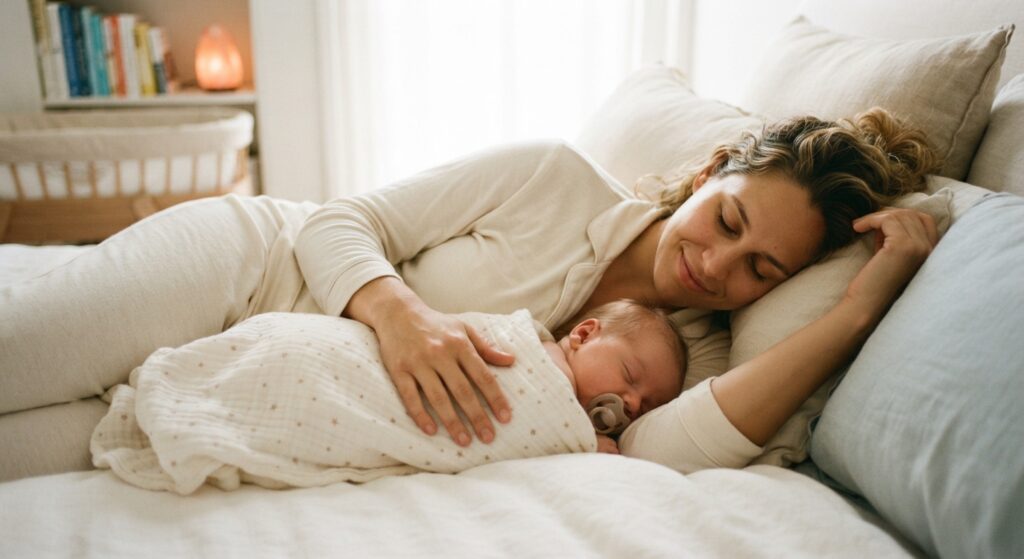
It’s 3 AM. Your baby just woke for the third time, you’re exhausted, and the warm spot next to you in bed looks awfully tempting. Lots of parents end up sleeping with their babies, whether they plan to or not. Here’s a clear look at what experts say, which situations are the most dangerous, and how to lower the risk if you’re tired and feeding in the night. This talks about sleeping with your baby.
What the AAP Recommends
The American Academy of Pediatrics (AAP) doesn’t recommend bed sharing at all. Its 2022 safe sleep advice says the safest place for a baby to sleep is on a separate, firm, flat surface, like a crib or bassinet, in your room and close to your bed. The AAP suggests keeping your baby in your room for at least the first six months. Room sharing has been linked to a lower risk of SIDS, and it keeps your baby close for feeding and comfort. For the full list of safe sleep steps, see our guide to SIDS and safe sleep.
Why So Many Families Do It Anyway
Parents and babies have slept near each other for most of human history. In many countries it’s the norm. Sleeping close makes night feeding easier, and it can help babies and parents settle. Anthropologist James McKenna, whose 1995 article appeared on this page for years, has long argued that close contact at night meets a baby’s needs for food, warmth, and comfort. He has also been clear that sleeping together needs precautions. And the AAP, looking at the same research, still advises against it.
Both sides agree on one thing. Some bed sharing situations are far more dangerous than others.
The Riskiest Situations
The risk climbs sharply, in some studies more than tenfold, when certain things are true. Bed sharing is especially dangerous if either parent smokes, even if the smoking happens outside the bed. It’s also dangerous if a parent has had alcohol or drugs, or takes medicine that causes drowsiness. Very tired parents face higher risk too, because exhaustion makes it harder to wake up.
The surface matters just as much. Never sleep with your baby on a couch, armchair, waterbed, or any soft surface. Babies can slip into the gaps, get wedged between cushions, or end up with their faces pressed into the fabric. Sleeping with someone other than a parent, like a sibling, a grandparent, or a sitter, also raises the risk. Premature or low birth weight babies and young infants are especially vulnerable.
Feeding in Bed Without Planning to Sleep
Night feeds are where most accidental bed sharing happens. If there’s even a slight chance you could fall asleep, the AAP advises feeding your baby in an adult bed, not on a sofa or cushioned chair. Clear away pillows, blankets, and anything else that could cover your baby. When you wake up, put your baby back in their own crib or bassinet. It’s far safer than dozing off on a couch.
Some parents find a bassinet or crib placed right next to the bed makes night feeds easier. You can reach your baby, lift them to feed, and set them back down without getting up. Our ultimate breastfeeding guide has more on getting through night feeds.
Tips if You’re Exhausted
You can cut the chance of an accident by planning ahead. Ask your partner to take a feed so you can sleep. Rest during the day when you can, and don’t be shy about accepting help from family or friends. If you’re so tired that you worry you’ll fall asleep during a feed, tell your doctor. Persistent exhaustion can also be a sign of postpartum depression, and help is available.
Many parents find the first few months are the hardest. Babies usually sleep longer stretches as they grow, and the nights get easier. Our guide to sleeping habits explains what’s normal at each age.
Questions Parents Ask
Is bed sharing ever safe?
The AAP says no form of bed sharing is recommended. If you choose to do it anyway, avoid every high risk situation above, and use a firm mattress with no pillows or loose bedding near your baby. Safer choices are room sharing with a crib or bassinet next to your bed.
What if I fall asleep with my baby by accident?
It happens to lots of parents. Move your baby to their own sleep space when you wake, and plan how to stay awake or set up a safer setup for the next feed. Don’t beat yourself up. Just use it as a cue to adjust.
Can I use a baby nest or a sidecar sleeper?
Baby nests, loungers, and similar soft pods aren’t made for sleep, so skip them. A bedside bassinet or sidecar that meets current federal safety standards for infant sleep is fine when used as directed. When in doubt, a plain crib or bassinet with a firm, flat mattress is the safest choice.
Does sharing a room count as bed sharing?
No. Room sharing means your baby sleeps in the same room on a separate surface. That’s the setup the AAP recommends.
Worth knowing. This page is general guidance and can’t replace advice from your baby’s doctor. If you have questions about your own situation, talk with your pediatrician. For more on everyday baby care, browse our BabiesDirect section.