When to start solid foods
Is your baby ready to taste cereal or banana? It depends. The American Academy of Pediatrics suggests introducing solid foods when your baby is 4 to 6 months old. However, not all babies are ready to eat solid foods at the same time. Rely on your baby rather than a calendar to let you know when it is time. If you introduce solid foods too early, your baby is more likely to have allergic reactions. Babies can’t properly chew and swallow solid foods before 4 to 6 months of age. And what you can’t see is that your baby’s digestive system must mature before it can handle these new foods.
Signs that baby is ready
Before you introduce solid foods, ask yourself these questions:
-
Has your baby doubled his birth weight?
-
Does your baby consume 32 ounces or more of breast milk or formula each day?
-
Can your baby sit up with little support and turn his head when he’s full?
-
Can your baby move a dab of thinned baby cereal to the back of his tongue and swallow it. This is a signal that baby’s extrusion reflex has disappeared and he now has the ability to swallow non-liquid foods.
-
Does your baby frequently put things in his mouth?
-
Is your baby interested in trying new tastes and textures?
-
Does your baby watch with interest as you eat, perhaps even opening his mouth and leaning forward as if to ask for a bite?
If you can answer yes to these questions, your baby may be ready to start solid foods. Just remember, until your baby is about a year old, his main source of nutrition should be breast milk or iron-fortified formula.
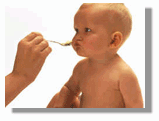
Feeding Guidelines
As you introduce your baby to solid foods, take things slowly to let your baby adjust to the new tastes.
-
When introducing a new food, offer just a spoonful or two at first and then gradually increase the amount. If your baby rejects a new food, don’t force it, but try it again later on.
-
Allow three to five days after each new food before introducing another so that you can pinpoint the cause of any allergies or other problems if they should occur. Look for these symptoms:
Changes in behavior, including fussiness, sleeplessness, or lethargy
Gastrointestinal changes, such as diarrhea or gassiness
Skin changes–rashes, eczema, hives, or chronic diaper rash
Upper respiratory symptoms, including cough, congestion, and a runny nose
-
As you introduce more new foods, remember to continue to offer the earlier foods that your baby enjoyed. For example, if your baby has no problems with vegetables and fruits individually, then you can alternate or combine them.
-
Gradually increase the times you offer solid foods and the number of foods at each feeding.
-
Avoid feeding your baby salty or sugary foods.
-
Never add honey.
An eating guide for your growing baby
• Use vegetables: As you begin feeding vegetables, start out with sweet yellow vegetables, such as cooked carrots, sweet potatoes, and squash. Once baby enjoys these vegetables, progress to darker vegetables, such as green beans, peas, and beets. By the time your baby is a year old, his vegetable intake should be about three tablespoons a day.
• Fruits: As you move on to fruits, begin with mashed apples and bananas. Most babies love them. Next, try mashed pears, peaches, plums, and apricots packed in water or their own juices (not sweetened). Or cook fresh fruits yourself; just be sure to remove any seeds or skin beforehand. Wait until your baby is at least a year old to try oranges and other citrus fruits and pineapple. Encourage your baby to eat half a cup of fruit each day.
• Fruit juices: The American Academy of Pediatrics suggests introducing juice when baby can drink from a cup (at about 6 months). If you replace breast milk or formula with juice before your baby is eating a well-rounded diet, he may not get the nourishment he needs from the foods he’s eating. As you first offer fruit juice, dilute it with water and introduce it slowly.
• The right time for meat: Hold off on feeding meat and poultry until your baby is about 9 months old and has developed front teeth. Begin to feed meats after baby has tried chunkier mashed vegetables and fruits as well as some finger foods. Start with finely chopped cooked meats, such as tender cuts of chicken, turkey, beef, lamb, and pork.