By Dr. Robert Naseef, Psychologist
Reflections on Fathers’ Day
This is my first Fathers’ Day since my father died. In many ways life is not the same. One thing I don’t miss is shopping for a card. It wasn’t like the 1950s sitcom “Father Knows Best” around our house. I remember my dad working a lot, and when he was home he was often grumpy and irritable, preaching to us that we had a better childhood than he did. So cards about having the perfect father never rang true or genuine.
Occasionally I could find one I felt good about. Other years I skipped the card and just called or visited. Last year I found a poem by e.e. cummings that captured my feelings toward my dad so well that I read it at his funeral. Cummings wrote that his father was a true father because his dad loved him, so Cummings loved him back. As a child he worshipped his father. In his youth he battled his father, and as a man they understood each other. Through it all they loved each other.
Cummings’ words certainly rang true for me. As a little boy I adored my father. I couldn’t wait for him to get home from work and put me on his knee and say, “How’s Daddy’s little boy?” As a teenager and as a young man, we did battle. We butted heads over everything from the Vietnam War to civil rights to religion and even whether marijuana should be legalized. If we agreed on anything, neither one of us would admit it. It wasn’t until he was an old man and terminally ill that I think we finally understood each other. I wish it hadn’t taken so long. I wish we weren’t so stubborn with each other. But still I count myself blessed, because I know many men who don’t understand or feel understood by their fathers.
Understanding My Father
Of course life is always easier to understand in hindsight. There’s a lot that’s still blurry to me, but it gets clearer as time goes on. In ancient times, Homer wrote that “it is a wise child who knows his own father.” It’s hard to know yourself if you don’t know your father. Childhood in our family was far easier than his had been. Both of his parents died within a year of each other when he was eight years old, and he grew up in an orphanage with other bereaved boys. He raised eight healthy children to adulthood, only to have one of my brothers die instantly in a car accident in 1978.
Being a father myself, and going through my own birth of a parent, helped me understand my father. As Fred Rogers of “Mr. Rogers’ Neighborhood” put it, “When you become a parent, it is your biggest chance to grow again. You have another crack at yourself.” As parents we weave together the threads of the past from our parents with the threads of the future in our children. It wasn’t until my middle age, when I’d been through a messy divorce, had four children of my own, and had struggled for many years with my son’s autism and a significant intellectual disability, that my father made more sense to me. As I came to understand my own grief, I realized I had grown up in the shadow of his.
Grief, Fatherhood, and My Son
Many men aren’t used to talking about their feelings, so when a child is diagnosed with special needs for a lifetime, we tend to hold in our grief over that loss of the future we imagined by withdrawing, isolating, and immersing ourselves in work. Fathers report exactly this pattern more broadly too. A fatherhood.gov resource on dads of children with special needs found fathers report high rates of isolation, partly from feeling like their own perspective gets overlooked in support systems built mostly with mothers in mind. The way my father lived with his grief didn’t work for me. I found myself too grumpy, irritable, and withdrawn. I stopped enjoying life, so I had to grow. This helped me understand my father in a new way, and how hard it was for him to grieve his losses. For a child, the worst loss imaginable is the loss of your parents. For a parent, the most feared loss is the loss of your child. Healing those broken dreams takes its own kind of work, separate from grieving a death.
A child’s disability or chronic illness changes and transforms us as men, as fathers, and as sons to our own fathers. There are joys as well as sorrows. It helps fathers of children with special needs to connect with other men in similar circumstances. When men sit around and share their experiences raising a child with special needs, I’ve noticed a pattern. They tell their stories of finding out something is wrong, getting a diagnosis, starting to get help, fighting for the best services possible, and learning how to communicate with their wives. They talk about their fears, their anger, and their frustrations.
Learning From Other Fathers
Telling your own story and listening to other fathers’ stories is how we learn about fatherhood. The stories of the fathers I know always end with how much they’ve learned and how they’ve become better men, better husbands, and better fathers. Underneath the often tough exterior of these men, they’re tender and loving, with good humor and insight. If you’d like to read more stories from fathers raising children with special needs, the Washington State Fathers Network is a good place to start. Let their struggles and joys touch your life too, and if you’re early in this journey, you will dream new dreams again, even if it doesn’t feel that way yet.
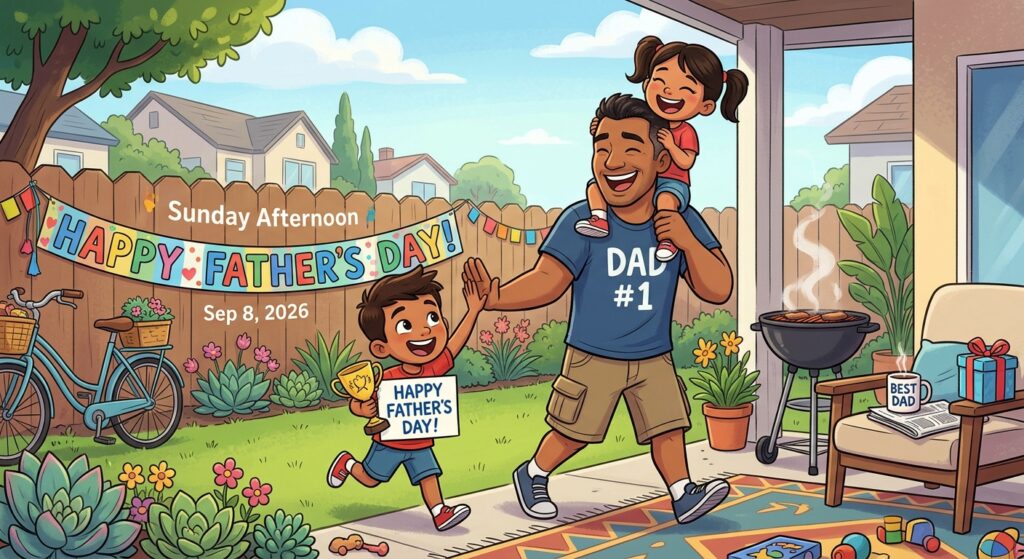
On my first Fathers’ Day without my father, I appreciate him for butting heads with me. I think he eventually knew, as I finally do, that we were just trying to connect. It was only when we stopped trying to change each other that we understood each other. I’m trying to make things a little easier for my children, but I’m not sure I always succeed. Like fathers everywhere, I want to give them an easier, better childhood than I had. But if I ever grumble to my beautiful children about how much better they have it than I did, will somebody in my family please shake me.