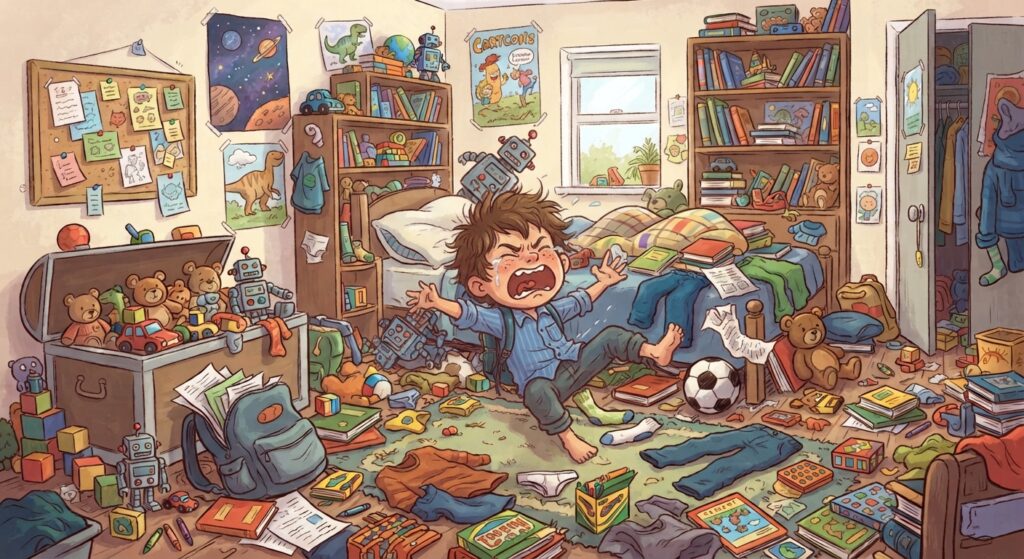
Every parent deals with tantrums. Nobody brags about them at pickup. Most of us just want to forget they happened, and we secretly wonder if our kid is the only one who does this. Handled the wrong way, a tantrum can spiral fast and leave everyone rattled. This is toddler tantrum.
It’s easy to read a tantrum as pure defiance, a kid trying to run the show. That reading misses what’s actually going on underneath. Miss it, and you end up fighting the tantrum instead of getting through it.
What a Tantrum Actually Is
A few basic truths make tantrums a lot less scary once you know them.
A tantrum is your child testing out independence. It’s how a toddler pushes back against a world that mostly tells them what to do.
A tantrum shows you a feeling, not a character flaw. Anger, frustration, disappointment. That’s what’s coming out, not defiance for its own sake.
A tantrum is not proof you’re failing as a parent. Kids this age hit walls they can’t handle yet. That’s biology, not bad parenting.
A tantrum belongs to your child. They start it because of something they’re feeling, so they’re the one who needs to finish it, not you.
Handle a tantrum well and it stops feeling like a monster. It starts acting more like an overtired puppy that just needs to wear itself out.
Why Independence Sets It Off
Independence matters. It’s one of the biggest jobs of early childhood, so let your child chase it.
As kids grow, they notice more of their world. They notice the people around them, the choices in front of them, and eventually the ways they might be able to bend all of it in their favor. Every toddler is a little self centered, and that’s not a flaw. It’s just where they are developmentally. To a toddler, the world looks like it exists to serve them. Toddlers between two and three are wired this way, according to the CDC’s guide to positive parenting for toddlers, and pushing against limits is part of how they grow.
Your job isn’t to shut that down. It’s to point it somewhere useful, showing your child which ways of getting what they want actually work.
What Your Child Is Really Trying to Tell You
You made me angry! You never give me what I want! A tantrum can sound like an accusation, but listen past the volume and you’ll hear something simpler. Anger, frustration, and disappointment looking for somewhere to go.
Those feelings need to be named, not brushed off. Naming them is one of the strongest things you can do for your relationship with your child.
Think about how good it feels when your partner, your parent, or your best friend actually gets what you’re going through. That’s all your child wants too. A line like “I know you’re upset that you didn’t get to” or “I’m sorry you couldn’t have that, I can tell how disappointed you are” does a lot of work. It tells your child their feelings are real and that you respect them enough to notice.
Separate the Feeling From the Behavior
Understanding your child’s feelings is not the same as giving them what they’re demanding. It’s not permission for the behavior either.
You can hold both at once. Validate the anger. Hold the line on the behavior. Let your child know their frustration makes sense while also letting them know throwing themselves on the kitchen floor isn’t how you handle it. Holding that line doesn’t call for spanking or physical punishment, it just means staying steady.
Your child’s anger at you is not your fault. It belongs to them, and it comes from something real they’re feeling in that moment. You don’t need to feel guilty because your child is furious with you. Anger isn’t a crisis. It’s just one more way kids express themselves before they have better words for it.
Let the Tantrum Run Its Course
A tantrum has a shape, a start, a middle, and an end, so treat it that way instead of trying to shortcut it.
Since your child starts the tantrum, it only makes sense that they’re the one who ends it. Say so out loud. Something like “I’m sorry you’re having such a hard time right now, I can see how angry and frustrated you are” lets them know you see it. Adding “and when you’re ready, we can talk about what’s next” reminds them the control is theirs.
Stay calm while they’re anything but. If the noise gets to be too much and you need to step into another room, say that plainly. If closing the door feels like the right move for you, tell your child that too, rather than just disappearing. What matters most is staying in touch with your child through the whole thing, without caving, without guilt, and without bargains or threats to rush it along. Threats and bargains almost always backfire, because kids can feel your own anxiety underneath them. Calm, clear, and steady is what your child actually needs from you. They’re out of control. They need you to not be.
Once the Storm Passes
Every tantrum ends eventually. When it does, sit with your child and talk it through.
Pull them close if they’ll let you, and put words to what happened. “You were so angry. I could tell. You really wanted that.” Kids need to know they’re still loved, even right after a blowup like that.
You can be honest that you didn’t enjoy watching them lose control, and that you’d rather it not happen that way again, while still making clear you understood why it happened. Never make a child feel small for how they felt. That’s the one thing to avoid above everything else. From there, talk through better ways to handle big feelings next time, and ask your child for their own ideas too. Making up afterward is one of the best parts of the whole cycle. It’s often when kids feel closest to their parents.
Every one of us has moments we’re not proud of, days we lose our footing. We don’t love being reminded of them, and we definitely don’t want to be defined by them. Your child is going through the exact same thing, just without the vocabulary yet to explain it any other way. We all want a little grace for our worst moments, and kids deserve that too.
Try not to panic the next time your child melts down. Keeping your own cool matters more than anything else you do in that moment. Your child isn’t trying to ruin your afternoon or push your buttons on purpose. They need you steady, not scared, and that’s really the whole job.
Sources: