By KidsDirect Editorial Team
Polio used to be one of the most feared diseases in the country. It’s the kind that filled hospital wards with kids in iron lungs. Most parents today have never seen a case, and that’s not an accident. It’s the direct result of decades of vaccination. That’s exactly why the vaccine is still part of the routine schedule even though the disease feels distant now.
What Is Polio?
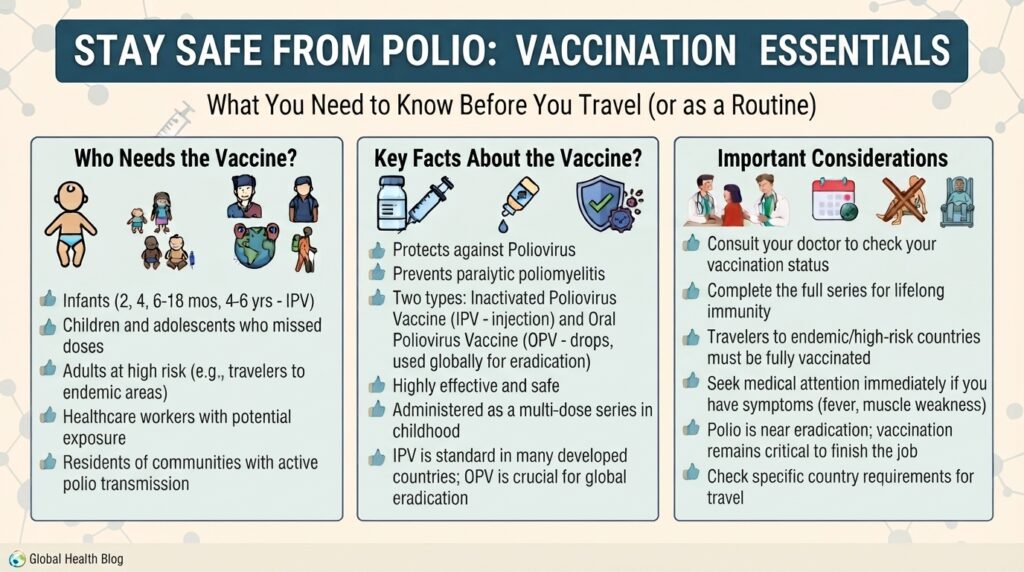
Poliomyelitis is a virus that spreads through contact with an infected person, often through contaminated water. Most people who catch it never feel more than mild flu like symptoms. That’s part of what made it so hard to contain historically. In a small number of cases, the virus attacks the nervous system. It can cause permanent paralysis, sometimes affecting the muscles needed to breathe.
Wild poliovirus no longer circulates in the United States. It still exists in a handful of countries though, and travel makes the world smaller than it used to be. An unvaccinated child is still vulnerable if the virus finds its way back in.
The Vaccine Schedule
Kids get their protection through the inactivated polio vaccine, known as IPV, given as a shot rather than the oral drops used in some other countries. The standard schedule runs at 2 months, 4 months, 6 through 18 months, and again at 4 through 6 years, for four doses total.
The protection builds quickly. Around 90 percent of kids are immune after just two doses. That climbs to at least 99 percent once the full series is finished. IPV is routinely given alongside other scheduled vaccines at the same visit, so it rarely means an extra trip to the doctor.
Possible Side Effects
IPV has a strong safety record. The most common reaction is soreness or redness where the shot was given. It usually fades within a day or two. IPV uses an inactivated virus rather than a live one, so it can’t cause polio itself. That was a real risk with the older oral vaccine still used in some parts of the world.
Skipping this one isn’t really an option worth weighing against the alternative. To see where polio fits alongside the rest of the schedule, check out the full vaccine timeline. For a broader look, our guide on how vaccines work covers the basics.