KidsDirect

HPV

HPV Vaccine

By KidsDirect Editorial Team

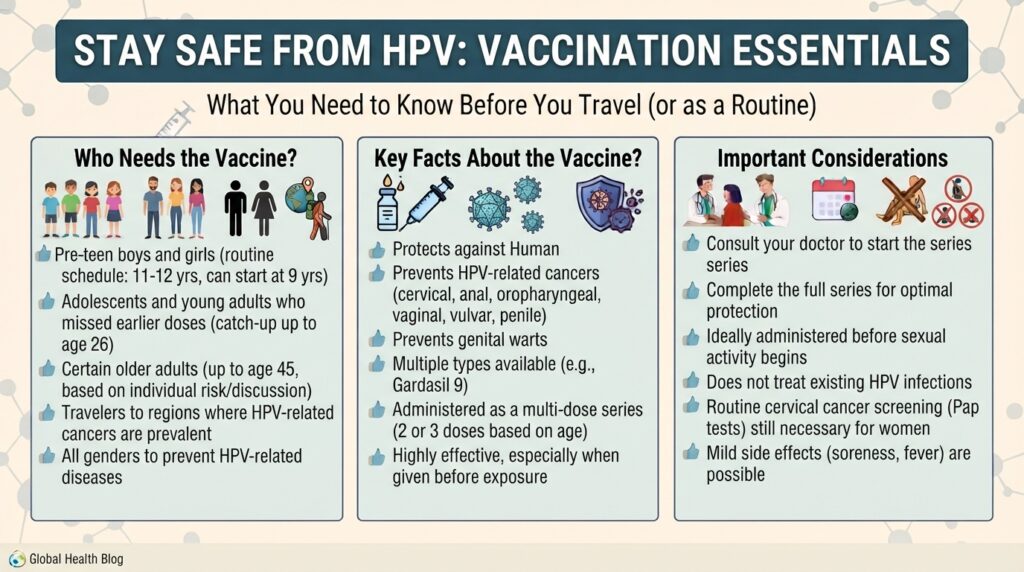
The HPV vaccine tends to catch parents off guard the first time a pediatrician brings it up, mostly because of the timing. Starting it around age 11 or 12 feels early for something tied to a sexually transmitted virus. The logic is actually pretty simple once you see it. This vaccine works best when it’s given well before any exposure happens. It also builds the strongest immune response at that age.

What Is HPV?

Human papillomavirus is extremely common. Most sexually active adults will come into contact with some form of it at some point. Most infections clear up on their own without ever causing a problem. Some strains don’t clear up so easily though. Those are linked to cervical cancer, several other cancers affecting both women and men, and genital warts.

HPV usually spreads without any obvious symptoms, so there’s no reliable way to know who’s carrying it. The vaccine sidesteps that uncertainty by building protection before it’s ever needed.

The Vaccine Schedule

Vaccination can start as early as age 9, though most pediatricians bring it up around 11 or 12. Kids who start the series before age 15 only need two doses, spaced 6 to 12 months apart. Starting at 15 or older bumps that up to three doses on a longer schedule.

Anyone who missed the window earlier can still catch up through age 26. In some cases, adults up to age 45 can get it too, after a conversation with a doctor about whether it’s still worth it.

Possible Side Effects

The most common reaction is soreness, redness, or swelling where the shot was given. Some kids feel a little dizzy or lightheaded right after. That’s common enough with preteen vaccines in general that most clinics have kids sit for a few minutes afterward as a precaution. Fever, headache, and fatigue can also show up, but they usually pass within a day.

The payoff shows up decades later, in cancers that never happen. For where this fits into the rest of the schedule, see our full vaccine timeline. Our guide to the two main types of vaccines covers how vaccines like this one get built.
Related Posts

perineal care after birth
Giving Birth
KidsDirect Editorial Team

Sore Body after Birth – Perineal Care

By KidsDirect Editorial Team Perineal Care After Birth Your perineum is the area between your vagina and your rectum. It does a lot of work during a vaginal delivery. Most new moms are surprised by just how sore this area feels afterward. Postpartum perineal care covers everything you can do to help it heal, feel less painful, and stay infection

Read More »
Pregnancy
KidsDirect Editorial Team

Pregnancy and Nutrition

What you eat while you’re pregnant does more than keep you comfortable, it’s one of the main ways you’re already parenting. The good news is that eating well for pregnancy isn’t nearly as complicated or as restrictive as a lot of old advice makes it sound. Below is what actually matters, what you can stop worrying about, and where a

Read More »
Games for your Baby
Babies
KidsDirect Editorial Team

Games for your Baby

By KidsDirect Editorial Team Baby Games The first year is packed with games that look simple but do a lot of quiet work. Every round of peekaboo, every silly song, every made up rhyme is also bonding time and brain building time rolled into one. You don’t need toys, flash cards, or a real plan. Babies are wired to connect

Read More »
breast milk leakage
Babies
KidsDirect Editorial Team

Breastfeeding Techniques and Positions

By KidsDirect Editorial Team Breastfeeding Techniques Good technique makes breastfeeding feel less like guesswork. It turns into something you and your baby can actually get the hang of together. A lot of early struggles come down to position and latch. They often have nothing to do with your body or your supply. Small adjustments can turn a frustrating, painful feed

Read More »
breastfeeding mother
Babies
KidsDirect Editorial Team

Breast Soreness During Breastfeeding

Sore breasts catch a lot of new moms off guard. Nobody warns you how much breastfeeding is a skill you and your baby learn together. It’s not something either of you is just born knowing how to do. Give yourself real time to get the hang of it. If breastfeeding never quite clicks for you, that’s not a reflection of

Read More »
Preparing for Pregnancy
Babies
KidsDirect Editorial Team

Preparing for Pregnancy

By KidsDirect Editorial Team Preparing for Pregnancy Most doctors recommend giving your body a three to four month head start as you start preparing for pregnancy. That sounds like a long runway, but there’s a good reason for it. A fetus starts forming in the very first weeks of pregnancy, often before you even know you’re pregnant. Whatever shape your

Read More »