KidsDirect

Chickenpox

Chickenpox Vaccine

Remember chickenpox? Itchy red spots everywhere, oatmeal baths, a week home from school. It used to be a rite of passage. Now most kids never get it at all, thanks to a vaccine that’s been around for decades and works really well.

Here’s what parents actually want to know about the chickenpox shot.

What the vaccine protects against

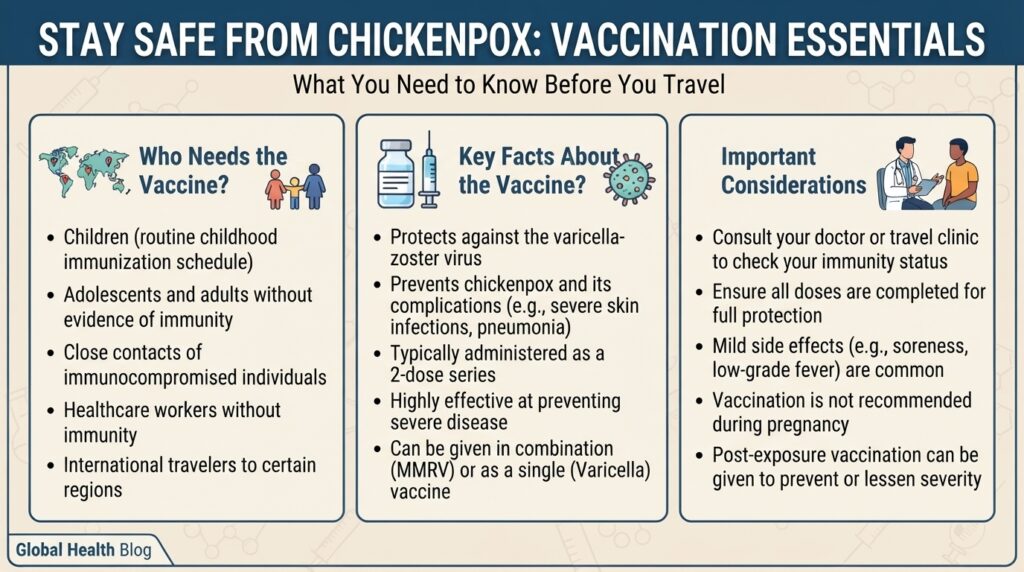
The chickenpox vaccine guards against varicella, the virus that causes those classic itchy blisters, fever, and days of misery. It’s not just about avoiding a rash either. Chickenpox can lead to skin infections, pneumonia, and in rare cases something much more serious. The vaccine cuts almost all of that risk down to nearly nothing.

Two doses get you about 90 percent protection against catching chickenpox at all. And here’s the part parents love, even the small number of kids who still get a breakthrough case after vaccination almost always have it mild. Think a handful of spots instead of hundreds, no fever, done in a couple days.

For most people, that protection lasts a lifetime. No annual booster, no yearly reminder from your pediatrician’s office.

When your child gets it

The CDC recommends two doses on a set schedule. The first dose goes at 12 to 15 months old, right around the same visit where a lot of kids get their MMR vaccine. The second dose comes later, between 4 and 6 years old, usually right before kindergarten starts.

It’s given as a simple shot, either on its own or combined with the measles, mumps, and rubella vaccines in one shot called MMRV. Your pediatrician can walk you through which option makes sense for your kid, since the combo shot isn’t automatically the right call for every age or every child.

If you’re curious about the bigger picture of why vaccines are spaced out the way they are, this page on how vaccines work breaks it down in plain terms.

What side effects to expect

Most kids sail through with nothing more than a sore arm. When side effects do show up, they’re usually mild and go away on their own within a day or two. Common ones include soreness, redness, or a little swelling where the shot went in, a mild fever, and occasionally a small rash near the injection site or a few scattered spots elsewhere on the body.

Serious reactions are rare. Your pediatrician can tell you what’s typical to watch for after each dose and when it’s worth a call.

Every child and every family situation is different, so if you have questions about timing, combining vaccines, or anything else specific to your kid, your pediatrician is the best person to talk it through with. For the full clinical details straight from the source, the CDC’s chickenpox vaccination page has the complete rundown.

Related Posts

High School Senior Studying
High School
KidsDirect Editorial Team

The High School Senior Year: A Parent’s Guide

By KidsDirect Editorial Team Junior year was about carrying a heavier load. Senior year is about carrying it to the finish line, and then handing most of it over. There’s real relief in that, for you and your teen both. There’s also a strange kind of pressure that shows up right when everyone expects things to ease up. Applications, financial

Read More »
high school sophomore year
High School
KidsDirect Editorial Team

The High School Sophomore Year: A Parent’s Guide

By KidsDirect Editorial Team Freshman year is loud. Everyone talks about the new building, the older kids, the adjustment. Sophomore year is quieter, and that’s exactly what makes it sneaky. Nobody warns you about tenth grade the way they warn you about ninth. But this is often the year a teen either settles into who they’re becoming. Or they start

Read More »
The High School Junior Year: A Parent's Guide
Family
KidsDirect Editorial Team

The High School Junior Year: A Parent’s Guide

By KidsDirect Editorial Team Freshman year was about adjusting. Sophomore year was about finding a footing. Junior year is different. This is the one where several big things land in the same twelve months. Harder classes, the PSAT, a driver’s license, maybe a first job, and the start of an actual college search. None of it waits for the others

Read More »
life skills for teens before college
Family
KidsDirect Editorial Team

How to Prepare Your Teen for Life After High School

By KidsDirect Editorial Team Graduation day gets all the attention, the cap, the gown, the photos on the lawn. What actually matters happened in the four years before it. Can your teen cook a meal, manage a bank account, and figure out a career path by the time they walk out that door? That gets decided long before senior year

Read More »
teen independence
Family
KidsDirect Editorial Team

Teen Independence, When Should Parents Step Back

By KidsDirect Editorial Team Your teen forgets their project at home for the second time this month. The first instinct is to drive it over. The better instinct, the one worth listening to, is to let them handle what happens next. That gap between those two instincts is where a lot of teen independence actually gets built. Not in some

Read More »
responsible high schooler
High School
KidsDirect Editorial Team

How to Raise a Responsible Teenager, A High School Parent’s Guide

Somewhere around freshman year, most parents start asking the same question. How does a kid who forgets their own backpack turn into an adult who pays rent on time. The honest answer is that responsibility isn’t something teens wake up with one day. It gets built, piece by piece, through actual practice with actual stakes. High school hands you more

Read More »