What The MMR Shot Actually Covers
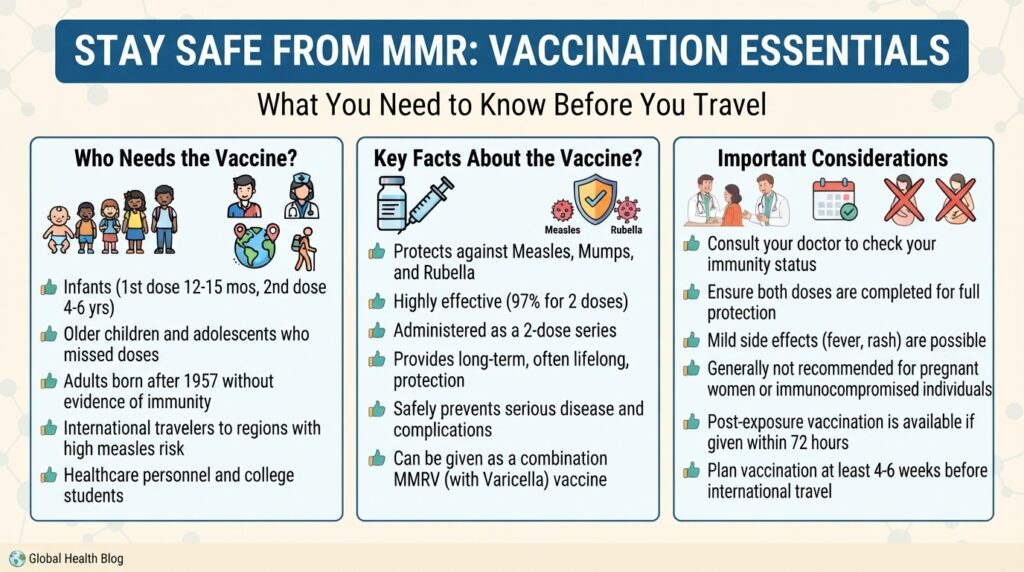
MMR stands for measles, mumps, and rubella, three diseases that used to send a lot of kids to the hospital before the vaccine came along. Measles is the one getting the most attention lately, and for good reason. Cases have been climbing again, with the CDC tracking over 3,000 confirmed infections in 2026 alone, most of them tied to outbreaks. It’s not a reason to panic, but it’s worth knowing that measles spreads incredibly easily and can lead to pneumonia or, in rare cases, brain swelling. Mumps causes fever and those puffy cheeks from swollen salivary glands, and it can occasionally cause hearing loss. Rubella is usually mild in kids, but it’s dangerous for pregnant women, since it can cause miscarriage or serious birth defects. One shot, three diseases covered. That’s the whole idea behind combining them.
When Kids Get It, According To The CDC
The CDC recommends two doses. The first one lands between 12 and 15 months old, right around the same age your baby might also get the chickenpox vaccine, so don’t be surprised if your pediatrician talks about both at the same visit. The second dose comes later, somewhere between 4 and 6 years old, usually before kindergarten starts. If you’re traveling internationally with a baby between 6 and 11 months, doctors sometimes recommend an early extra dose before the trip, then the regular two doses still happen on schedule afterward. Kids who miss doses or fall behind can catch up, there’s no need to start over, your doctor just adjusts the timing. If you’re curious about the bigger picture of why shots are spaced out the way they are, this page on how vaccines work breaks it down in plain terms.
What To Expect Afterward
Most kids do just fine. The shot itself is quick, a small pinch in the arm or thigh depending on age. Afterward, some kids get a sore arm, a mild fever, or a faint rash that shows up a week or so later and fades on its own. A little swelling near the jaw or neck happens sometimes too, that’s the body doing its normal immune response thing, not a sign anything’s wrong. Older girls and women occasionally get some temporary joint achiness. Serious reactions are rare. Febrile seizures can happen, but they’re uncommon and don’t cause lasting harm. And for parents who’ve heard the old rumor linking this vaccine to autism, that claim has been studied extensively and repeatedly, and no connection has ever been found.
Every kid is different, and every family has their own questions about timing, catch up schedules, or how MMR fits alongside other shots. Your pediatrician knows your child’s health history and can walk through what makes sense for your situation. For the full rundown straight from the source, the CDC’s MMR vaccine safety page has detailed information on side effects and how the vaccine is monitored over time. Bring your questions to your next visit, there’s no such thing as asking too much when it comes to your kid.