By Dr. Kalman Heller, Child and Family Psychologist
The College Obsession Starts in the Crib
We’ve become a nation obsessed with the idea that a college education isn’t just a must for everyone, practically an inalienable right, but that a truly successful life requires attending the very best college possible. This is a myth, and yes, it really is one. It creates unreasonable stress on high school students and their families, and it trickles all the way down to preschools, even to the crib. The age old question is does it matter which college you attend? Parents have been sold unproven theories about how much of a child’s ability gets locked in during the earliest days, months, and years of development, the so-called critical periods for brain development, and the anxiety starts early and follows the child for years.
It Really Doesn’t Matter Where You Go
Please hear me out on this one. It matters remarkably little which college you attend. Plenty of people currently in college don’t actually belong there. Playing classical music to your fetus, spending extra hours “educating” your toddler, and fighting to get your child into the most academically demanding preschool is the wrong place to be putting your time and money.
The Research Keeps Confirming This
I’ve been saying this for years, and periodically a new piece of research comes along that backs it up again. One well known study tracked students who’d graduated from a wide range of schools with roughly a 200 point gap in their freshman class’s average SAT scores, following them nearly 20 years into their careers. Once you account for a student’s own talent and drive, which college they attended barely mattered. A bright, motivated person ends up with roughly the same odds of success regardless of which school’s name is on the diploma.
Your First Job Is the Only Place It Matters
Where you went to college tends to influence your very first job, mostly because an employer doesn’t have much else to go on yet. After that, what actually matters is what you accomplish in the real world, and by then plenty of other factors take over. Which factors matter most depends on your field, but people skills consistently rank near the top of the list, and it’s something nobody bothers to actually teach along the way. Add in the fact that most college graduates end up in careers with little connection to their major, plus roughly 36 percent of students who start a bachelor’s degree still haven’t finished it six years later, and you start to get a more honest picture of what’s actually going on out there.
School Rewards a Narrow Kind of Smart
Part of the problem is that school is built in a way that barely resembles the real world. The most “successful” students aren’t necessarily the smartest kids. They’re the ones with academic-type smarts paired with an academic-type personality, meaning kids who are more willing to be passive learners, follow rules rather than question them, learn best through language, and stay naturally organized, since we still insist on making students juggle several unrelated subjects at once. Educators have also long been drawn to the idea of “multiple intelligences,” the notion that real ability shows up in far more forms than school ever measures. It’s worth being honest that the specific theory, as originally proposed, hasn’t held up well under rigorous scientific testing. But the underlying observation still rings true. School measures a narrow slice of what makes a person capable, and plenty of very real strengths never get picked up by it at all.
The Cost of Getting This Wrong
The result is that a lot of kids experience frustration and failure in school that leaves them feeling stupid when they’re anything but. It’s really a failure of the system to notice and build on each student’s actual strengths. Parents get pulled into this in a few unfortunate ways, mainly by unintentionally reinforcing the school’s message that something is wrong with their child. And far too many of the precious few hours parents actually get with their kids go to fighting about homework and grades.
What Actually Matters Instead
If we can’t fix the schools themselves, I at least wish parents could recognize that top grades and the “best college” were never really the goal of raising a child in the first place. Plenty of kids who struggle through school go on to do very well in the real world, as long as they leave with a reasonable amount of self-respect intact and manage to find something they genuinely love doing, with some real skill behind it. How many parents get frustrated when their child only excels in the subjects they actually enjoy? And yet once we’re adults, isn’t finding work we love exactly what most of us are chasing? There’s real value in exposing kids to a well-rounded education, no argument there. Just stop fixating on the grade attached to it, and focus on the exposure itself.
Choose a Place to Live, Not Just a Name
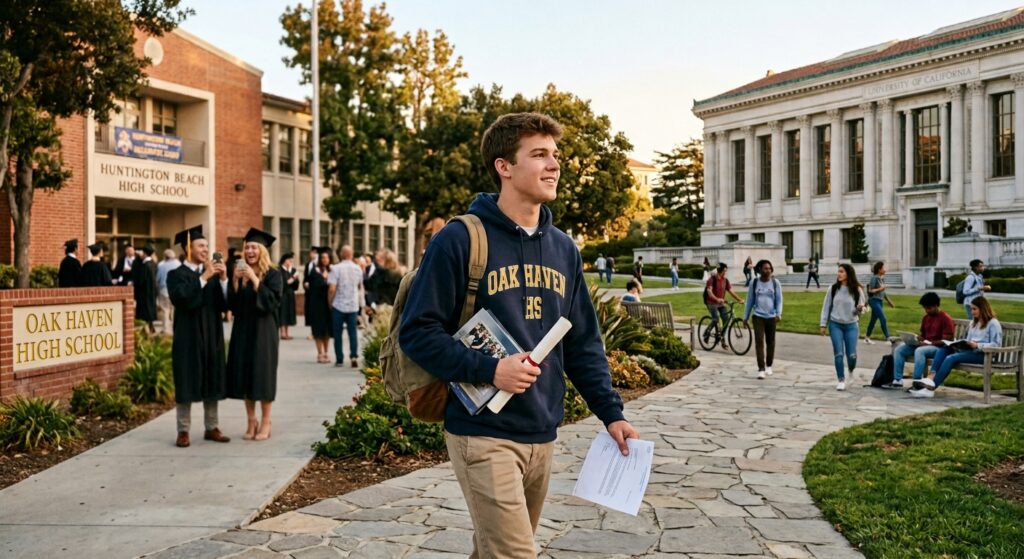
Plenty of high school students right now are either waiting to hear from their top-choice college or just starting the search. Students and their families have become increasingly obsessed with padding a resume just to get into the most highly ranked school, whether or not it actually fits the student. I’d much rather see students think of their four years of college as a living experience first, an academic one second. The real factors in choosing a school should look a lot like the ones you or I would weigh if we had job offers in different parts of the country. Where would you actually want to live for the next four years? What genuinely fits your personality and interests? Where would you feel most at home?
College Isn’t the Only Path
For plenty of high school graduates, the best fit honestly isn’t college, at least not right away. It might mean working for a few years to figure out what they’re actually good at, then getting trained in those specific skills. For others, it might just mean gaining some life experience, maybe somewhere far from home and very different from it. These young people often need real room to mature, because school and home life rarely build the confidence or self-awareness it takes to figure out where they’d actually succeed. Too often, parents are terrified that any time off before “going straight for the degree” means that degree will never happen at all.
The Person Matters More Than the Degree
We’re too obsessed with degrees and not nearly obsessed enough with the development of the actual person. Over the long road of a life, it’s the person who ends up mattering, not the diploma.