By KidsDirect Editorial Team
Gestational Diabetes
Hearing that your glucose test came back high can rattle you. You’re probably wondering what you did wrong, and the answer is nothing. Gestational diabetes is high blood sugar that first shows up during pregnancy. It’s common, it’s treatable, and it usually goes away after your baby is born. This guide walks through how it’s found, how it’s managed, and what to expect for you and your baby. This is about gestational diabetes.
What Gestational Diabetes Is
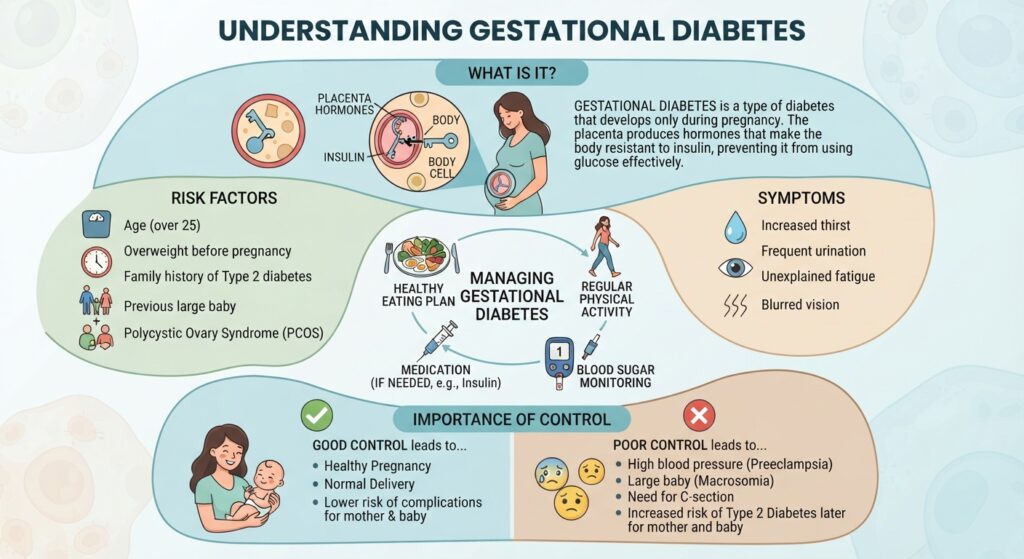
Your body makes a hormone called insulin that moves sugar from your blood into your cells for energy. During pregnancy, the placenta makes hormones that make your body less responsive to insulin. Most people’s pancreas simply makes more insulin to keep up. When it can’t, blood sugar climbs, and that’s gestational diabetes. Picture a door that sticks. Insulin is the key, and pregnancy hormones make the lock harder to turn.
About 1 in 10 pregnant women in the United States is diagnosed with it, according to Yale Medicine, and the numbers have climbed over the past two decades. Lots of people are walking this same road right now.
Who’s More Likely to Get It
Anyone can develop it, and plenty of people who do have no risk factors at all. Still, some things raise the odds. Being overweight before pregnancy counts, and so does having a parent or sibling with diabetes. Other risk factors include polycystic ovary syndrome, being over 25, having had gestational diabetes in an earlier pregnancy, and having had a previous baby who weighed more than 9 pounds. MedlinePlus also notes a higher risk for people with Latino, African American, Native American, Asian, or Pacific Islander backgrounds.
Having risk factors doesn’t mean you’ll get it, and having none doesn’t mean you won’t. That’s why nearly everyone gets tested.
What the Symptoms Look Like
Here’s the tricky part. Most people feel completely fine. When symptoms do show up, such as extra thirst, frequent urination, tiredness, or blurry vision, they look a lot like ordinary pregnancy. It’s easy to blame them on being pregnant. That’s why you can’t go by how you feel, and why the screening test matters so much.
How It’s Tested
Most providers screen between 24 and 28 weeks. You’ll find this test on our list of tests during the second trimester. The most common approach has two steps. First you drink a sweet glucose drink, then have your blood drawn an hour later. Most clinics don’t require fasting for this part, but follow the instructions your office gives you.
If your result lands above the cutoff, which is usually somewhere between 130 and 140 mg/dL depending on your provider, you’ll come back for a longer test. This time you fast, drink a stronger glucose drink, and have blood drawn several times over about three hours. A diagnosis usually means at least two of those readings came back high. Some clinics skip the first step and go straight to a single longer test.
A high first result isn’t a failure. Many people who don’t pass the quick screen pass the longer test. If you have strong risk factors, your provider may also test earlier, sometimes at your first visit. Our prenatal appointment timeline shows what usually happens at each stage.
Checking Your Blood Sugar at Home
After a diagnosis, you’ll learn to check your blood sugar with a small meter and a quick fingerstick. Most plans call for a reading when you wake up, before you eat, and again one or two hours after meals. The American Diabetes Association lists common pregnancy targets of under 95 mg/dL fasting, under 140 mg/dL one hour after a meal, and under 120 mg/dL two hours after a meal. Your provider may set slightly different numbers for you, so go with theirs.
Write every reading in a log or an app, along with what you ate. Patterns show up fast. You might notice that cereal at breakfast sends your numbers up while the same carbs at dinner don’t. One more small detail. Vitamin C and acetaminophen can throw off some meters, so mention any you take.
Eating With Gestational Diabetes
Food is the first tool, and it’s the one that works for most people. A registered dietitian can build a plan around your culture, your budget, and your schedule, so ask your provider for a referral. The general idea is to spread carbohydrates across the day, with three meals and two or three snacks, instead of loading up at one sitting. Pairing carbs with protein or healthy fat slows how fast the sugar reaches your blood in gestational diabetes.
Juice, soda, and sweetened drinks tend to spike numbers fastest, so water is the easier choice. Whole grains, beans, vegetables, and fruit with protein usually behave better than white bread or sweets. Don’t cut carbs down to nothing, though. You and your baby still need them. And this isn’t a weight loss plan, so check our pregnancy weight gain chart and talk with your provider about what’s right for you.
Getting Moving
Exercise helps your muscles use sugar with less insulin, which is why it lowers blood sugar so well. One of the easiest habits is a 10 to 15 minute walk after meals. If your provider says it’s fine, most people can aim for about 30 minutes of walking, swimming, or prenatal yoga on most days. Start small if you haven’t been active, and stop if something feels wrong.
When Medication Comes In
If your numbers stay above target even with changes to eating and activity, your provider may add medication. The American College of Obstetricians and Gynecologists considers insulin the preferred treatment in pregnancy. Some providers use metformin pills when insulin isn’t an option. Needing medication doesn’t mean you did something wrong. It means your body needs more help than food and movement can give right now.
What It Means for Your Baby
Extra sugar in your blood crosses the placenta, and your baby’s pancreas answers by making extra insulin. That can lead to a larger baby, sometimes over 9 pounds, which makes delivery harder and raises the chance of a cesarean. After birth, your baby’s insulin is still running high while the sugar supply from you has stopped. Low blood sugar can follow. Nurses check your baby’s blood sugar in the first hours and feed early to keep it steady.
These risks drop a lot when your numbers stay near target, which is the whole point of the monitoring. Some research also links gestational diabetes to a higher chance of obesity and diabetes for children later on. That’s one more reason to build healthy habits as a family.
What It Means for You
Gestational diabetes raises your chance of preeclampsia, which is high blood pressure during pregnancy, and of problems in labor or a cesarean birth. The bigger story comes later. Women who’ve had it are more likely to develop type 2 diabetes. A 2022 evidence review found that about one in three develops diabetes within 15 years after the pregnancy. That sounds scary, but it also means you have time to head it off with checkups, movement, and a steady way of eating.
Labor and Delivery
Your provider may suggest extra ultrasounds or monitoring in the last weeks, especially if you take medication. According to ACOG guidance, delivery for gestational diabetes controlled with diet and exercise shouldn’t happen before 39 weeks unless there’s another reason, and many people can wait until 40 weeks and 6 days. If you take medication, delivery is usually recommended between 39 weeks 0 days and 39 weeks 6 days. Your doctor may plan differently based on your health and your baby’s size.
Your blood sugar gets checked during labor to keep it steady. Gestational diabetes alone doesn’t mean you’ll have a cesarean, and plenty of people deliver vaginally. Our guide to labor covers what to expect, and a birth plan is a good place to write down your wishes.
After Your Baby Arrives
For most people, blood sugar returns to normal soon after delivery. You still need a follow up test, though. ACOG and the ADA both recommend testing 4 to 12 weeks after birth to check for prediabetes or type 2 diabetes. After that, the ADA recommends testing every 1 to 3 years for life, even if your first result is normal. Put a reminder in your phone, because this is the step people forget.
Ask your provider about breastfeeding too, since it’s generally encouraged after gestational diabetes. Our ultimate breastfeeding guide is a good place to start. If you get pregnant again, tell your provider early, since having had it once is a risk factor for next time.
Questions Parents Ask
Did I cause this?
No. Hormones, genetics, and how your body handles insulin all play a role, and none of that is within your control. Eating a cookie didn’t cause it.
Can I prevent it?
You can’t guarantee prevention, but a healthy weight before pregnancy, regular movement, and balanced meals help lower the odds. If you develop it anyway, that doesn’t mean you did something wrong.
Will my baby have diabetes?
Not at birth. Gestational diabetes is about your blood sugar during pregnancy. Your baby may have low blood sugar for the first hours, and it’s checked and treated.
Will I need a cesarean?
Not necessarily. A very large baby or other complications can make one more likely, but many people with gestational diabetes deliver vaginally.
When to Call Your Provider
Call if your readings keep coming in above target even though you’re following your plan. Call if you’re vomiting and can’t keep food or fluids down, or if you notice your baby moving less than usual. If you take insulin, a reading under 70 mg/dL with shakiness, sweating, or confusion needs quick treatment and a call afterward. A severe headache, vision changes, or sudden swelling can be signs of preeclampsia, so call right away.
Worth knowing. This page is general information and can’t replace the plan your provider builds for you. MedlinePlus has a clear overview of gestational diabetes if you want a second source. To keep going, browse our pregnancy section or use the pregnancy weekly calculator to see what’s happening each week.