A quick note before you dive in
This page explains what an ectopic pregnancy is and what the warning signs look like, it isn’t a substitute for medical care. If you’re pregnant and having any of the symptoms below, don’t wait to see what happens. Call your doctor or go to an emergency room right away.
What an Ectopic Pregnancy Is
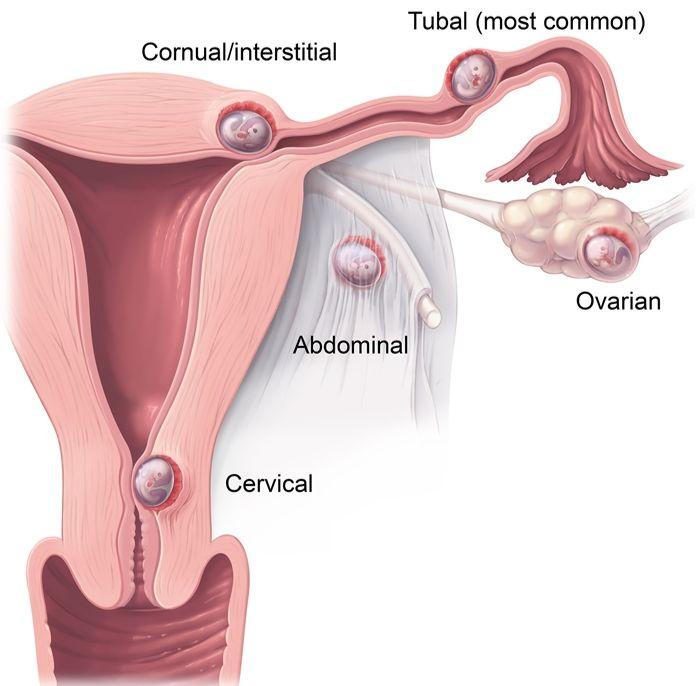
An ectopic pregnancy happens when a fertilized egg implants somewhere other than the uterus, usually inside a fallopian tube, which is why you’ll also hear it called a tubal pregnancy. Less often, it implants in an ovary, the cervix, or somewhere in the abdomen. Wherever it lands, a fallopian tube or any of those other spots simply isn’t built to hold a growing pregnancy. As it grows, it stretches tissue that can’t stretch that much, and if it ruptures, that can cause serious internal bleeding fast. This is a medical emergency, not something to monitor at home.
What Causes It
Anything that slows down or blocks an egg’s normal trip through the fallopian tube raises the risk. That includes scar tissue from a past pelvic surgery, tube damage from a previous infection, an unusually shaped tube, endometriosis, or a growth pressing on the tube from outside. Having had an ectopic pregnancy before, or conceiving while an IUD is in place, also raises the odds. Age over 35, smoking, and fertility treatments like IVF are linked to higher risk too.
Here’s the part worth knowing though. Roughly half of everyone who has an ectopic pregnancy has none of these risk factors at all. It can happen without any warning sign that it was coming.
Symptoms
Early on, an ectopic pregnancy can feel exactly like a normal one, which is part of what makes it tricky. As it progresses, though, some symptoms are more specific. Watch for dull or sharp pain low in your abdomen, spotting or heavier vaginal bleeding, and pain in your back or the tip of one shoulder, which sounds like an odd place to notice it but is a genuinely common sign. Nausea, weakness, feeling faint, or a racing heartbeat can show up too.
When to get emergency care right now
Sudden, severe abdominal pain, heavy vaginal bleeding, fainting or feeling like you might pass out, and shoulder pain paired with any of the above are all signs a tube may have ruptured. That’s an emergency. Call 911 or get to an emergency room immediately rather than waiting for a callback from your doctor’s office.
How It’s Diagnosed
A blood test that tracks your pregnancy hormone, hCG, along with an ultrasound, usually confirms whether a pregnancy is where it should be. If your hCG levels aren’t rising the way they should, or an ultrasound can’t find a pregnancy inside the uterus when it should be visible, your doctor will likely check further before anything else happens.
Treatment
If it’s caught early and you’re stable, a medication called methotrexate can often end the pregnancy without surgery, followed by blood tests to confirm your hormone levels drop the way they should. If the pregnancy is further along, if a tube has already ruptured, or if surgery is otherwise the safer option, it’s typically done laparoscopically, through small incisions, and your surgeon will remove the pregnancy while trying to preserve the tube itself when that’s possible.
What This Means for the Future
An ectopic pregnancy is frightening, and it’s real grief on top of a real medical emergency. Here’s something reassuring worth holding onto though. Most people who go through one, even those who lose a fallopian tube in the process, go on to have a healthy pregnancy later. There’s roughly a 10 percent chance of another ectopic pregnancy next time, which is exactly why an early ultrasound to confirm where a future pregnancy has implanted matters so much. Whether you were treated with medication or surgery that preserved the tube doesn’t seem to change those future odds much either, so try not to carry extra worry about which treatment you had.
If anything here matches what you’re feeling right now, don’t wait on this page to make the decision for you. Call your doctor or get to an emergency room. Our Signs and Symptoms of Pregnancy page covers what’s typical in early pregnancy if you’re trying to sort out what’s normal, and our Pregnancy F.A.Q. page answers a lot of the other early questions that tend to come up.
Sources: