By Dr. Kalman Heller, Child and Family Psychologist
Step One: Define the Target Behavior
There are four main steps to building a behavior chart that actually works. First, define the “target behavior,” meaning exactly what you want to change. Talk this through with your child. It’s not a guessing game, and your child needs to be part of the process from the start. Let’s use an oppositional child who seems to say no to every request as our example, since that kind of pattern tends to create a lot of unnecessary conflict. Sit down with your child and share your sense that there’s too much fighting and yelling happening, then ask for his take on the problem. Sometimes kids agree right away and genuinely want things to improve. Others will deny there’s a problem at all, or blame it entirely on you being unfair. Explain that you think part of the struggle is that his first response to almost every request is “No.” Since he’ll probably push back on that too, this is exactly where the data-gathering stage comes in.
Step Two: Track a Baseline
Step two is building a “baseline,” a simple frequency chart of the behavior itself. Write out a clear, specific description of the behavior you’re tracking, one your child can understand, and put it at the top of the chart. List the days of the week, and tell your child that for the next week or two, you’re simply going to add a slash mark each time the behavior happens. This step often produces a surprise. Parents frequently learn the behavior isn’t happening quite as often as they assumed. Sometimes the timing patterns even hint at what’s triggering it. Just being able to name the behavior clearly and mark it down often gives a parent a real sense of having a way to respond, replacing some of the powerlessness that tends to creep into these situations. Meanwhile, seeing the numbers in black and white sometimes leads a child to spontaneously cut back on the behavior. For this example, let’s say the child is averaging 11 no’s a day.
Step Three: Set a Realistic Goal
Step three means building a new chart, often including a description or drawing of the behavior you actually want to see instead, so your child knows what to do in place of the old habit. Most importantly, it needs a specific, achievable goal for reducing the unwanted behavior, one that earns a reward once it’s hit. This part is critical, and it evolves over time. Start with a small reduction, say dropping from 11 to 8 no’s a day, because you want to all but guarantee an early win. That early success is what hooks the child into the program. Each time your child hits the goal consistently for about a week, usually meaning 5 or 6 days out of 7, since perfection isn’t the point, raise the bar by a reasonable margin, maybe down to 5 no’s a day next. Keep every goal, including the final one, within reach of what your child can realistically do. Zero no’s a day isn’t a reasonable target, since always agreeing isn’t normal behavior for a child, or for an adult for that matter. What you’re really after is bringing the negativity down to a level that allows for a more positive relationship, not eliminating it completely.
For Multi-Step Routines, Try a Visual Chart Instead
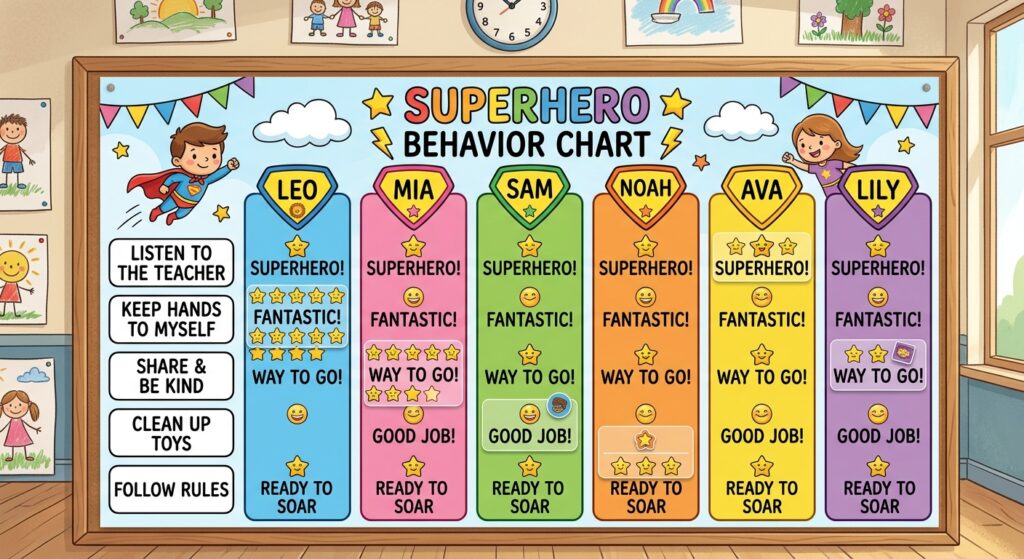
For more complex sequences, like getting ready for school in the morning or getting ready for bed at night, you’ll typically skip the baseline chart altogether. Instead, build a large chart together with your child that breaks the process into smaller steps, marked with drawings or magazine cutouts, often with time goals written in big block letters next to each one. During the morning routine, for instance, you keep referring back to the chart, asking where your child is in the sequence, which takes a lot of the parent-child power struggle out of it and turns the whole thing into a “follow the chart” game instead. A second chart can track stickers earned for finishing individual steps or the whole routine. This is very similar to the visual schedule approach that works well for toddlers, just adapted for an older child’s routine.
Step Four: Choose the Right Reward
The final step is picking the reward, and this is where real creativity matters, and where most of the confusion around this whole system tends to come from. Asking your child what he’s willing to work for is often effective, though you may need to turn down a few outlandish requests along the way. You don’t need to buy a pile of toys as rewards. In fact, I rarely recommend that route at all. Extra one-on-one attention from a parent is one of the most powerful reinforcers there is, especially for younger kids. Sometimes daily stickers are enough to hold a child’s interest until he can cash in the full chart for lunch alone with a parent on Saturday. As a rule, the younger the child, the more immediate, but also the simpler, the reward needs to be. If your child collects something small and inexpensive, that can work really well too. One of the more creative options is making the reward the very thing the chart is targeting, extra TV time, a later bedtime, or skipping a chore for a day or a weekend. Another favorite of mine is buying a toy or game, keeping it put away, and letting your child earn minutes of playtime with it. That one tends to work especially well. The CDC’s guidance on praise and rewards covers similar ground if you want more examples.
Don’t Protect the Behavior You’re Trying to Change
Some parents insist their child, despite behaving badly elsewhere, doesn’t care about anything, and that nothing works as a reward. In reality, that child is almost always genuinely invested in some activity. But when a child is struggling, parents often feel protective of “the one thing he’s doing right” and hesitate to touch it. Sometimes the parents themselves are just as invested in that activity as the child is. Either way, it helps to explain to your child that these special activities are a privilege, one that continues only if it’s earned through more cooperative behavior overall. Too often, parents are genuinely upset about a child’s unacceptable behavior while still rearranging their entire lives to make sure that same child gets to every practice and every meeting. That’s a mixed message if there ever was one. Next time your child acts up, consider skipping the soccer game or the scout meeting, and use those same activities as rewards tied to specific behavior improvements instead.
How Long This Usually Takes
Kids typically stick with a reward program for only a short stretch of time. If it’s not working, or it stops working, that usually just means the reward needs refreshing to keep some novelty in it. Most importantly, within a few weeks, most kids have made the change you were looking for and keep the improved behavior going without any further charting, either because they’ve simply gotten unstuck, or because they’re getting enough genuine praise and warmer responses from their parents that the chart isn’t needed anymore.