By KidsDirect Editorial Team
Car Safety for Infants
Your baby needs to ride in a properly installed car seat every single time the car is moving. That’s true even for a trip just around the block. Most hospitals won’t let you leave without one already installed in your car. Every state requires it by law from day one. If you’re still shopping for a seat, our BabiesDirect Car Seat Buying Guide can help you pick the right one. The guidance below covers how to use it correctly. It’s pulled from the National Highway Traffic Safety Administration’s current recommendations, which have changed quite a bit since the early 2000s. This is general car safety for infants.
Why Rear-Facing Comes First
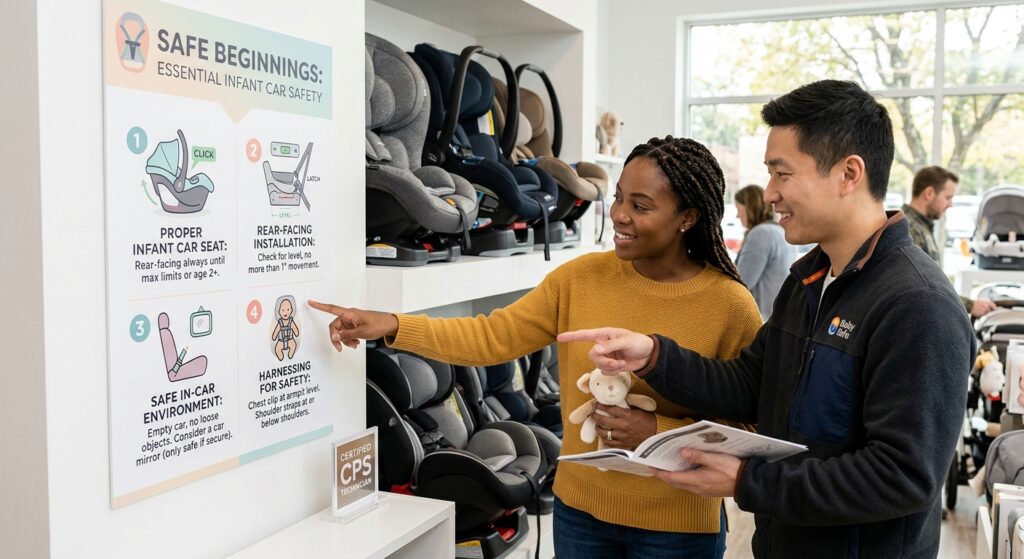
Every infant rides rear facing, with no exceptions. A newborn’s neck and spine simply aren’t strong enough to handle the force of a crash facing forward. Rear facing spreads that force across the whole body instead of concentrating it on the neck. That makes a real difference in how severe an injury turns out to be. Keep your baby rear facing until they outgrow the height or weight limit printed in your specific seat’s manual, not just until a birthday. Most babies have plenty of room to stay rear facing well past their first birthday. Current guidance from pediatric safety groups recommends staying rear facing as long as your seat allows rather than switching early.
Picking an Infant Seat (car safety for infants)
Most parents start with a rear facing only infant seat, since the detachable carrier makes it easy to move a sleeping baby without waking them. Some families choose a convertible seat instead. It installs rear facing from birth and later converts to forward facing as your child grows. Either option works well as long as it fits your baby’s current size and your car. Check the weight and height minimums before you buy. Very small or premature babies sometimes need a seat rated for lower starting weights. Also check the expiration date molded into the plastic shell. Most car seats expire somewhere between six and ten years after manufacture, since the plastic degrades over time and safety standards keep improving.
Why the Back Seat Still Matters Most
Keep your baby in the back seat, centered if possible. A front passenger airbag deploys with enough force to seriously injure or kill an infant, even in a low speed crash. The back seat is the only safe place for a rear facing seat. This hasn’t changed and isn’t likely to anytime soon.
Getting the Harness Right
The harness straps should sit snugly over your baby’s shoulders, at or just below shoulder level for a rear facing seat. A simple way to check the fit is the pinch test. Try to pinch the strap webbing at your baby’s shoulder. If you can pinch any excess fabric, it’s too loose and needs tightening. The chest clip belongs at armpit level, not down near the stomach. One detail a lot of parents miss involves winter coats. A bulky, puffy coat compresses under the force of a crash. That leaves the harness far looser than it looks. It’s safer to buckle your baby in wearing just a thin layer and add a blanket over the straps afterward if they need extra warmth.
Hot Weather Precautions
On warm days, keep the car’s interior cool before your baby gets in. Check the seat itself for hot spots before buckling your baby in. Metal buckles and dark plastic heat up fast in direct sun. Covering the seat with a towel or light blanket when you park helps keep it cooler for the next ride. It’s also worth repeating one of the most important rules in car safety. Never leave a baby alone in a parked car, even for a minute. This holds even if they’re sleeping peacefully and you’re just running in to grab something. The inside of a car can reach dangerous temperatures far faster than most people expect. Infants can’t regulate their body temperature the way older kids and adults can.
When It’s Time for the Next Seat
Once your baby outgrows the infant seat’s height or weight limit, usually sometime in the first year or two, the next step is a convertible seat. It continues rear facing at first, then eventually transitions forward facing as your child grows. From there, kids typically move through a forward facing harnessed seat, then a booster seat, before graduating to the vehicle’s seat belt alone. That last step usually happens once they’re tall enough for the belt to fit properly on its own. We’ll cover that fuller progression in a separate guide to car seat stages beyond infancy.
A Few Things Worth Confirming
Whatever seat you choose, confirm it meets federal motor vehicle safety standards. Every car seat sold in the United States is required to meet them. Most seats also support the LATCH system, a set of built in anchors that let you install the seat without using the vehicle’s seat belt at all. Either installation method is safe as long as it’s done correctly and snugly. Aim for less than an inch of movement at the seat’s belt path once installed. Many local fire departments and hospitals offer free car seat inspections if you want a second set of eyes on the installation before you bring your baby home.