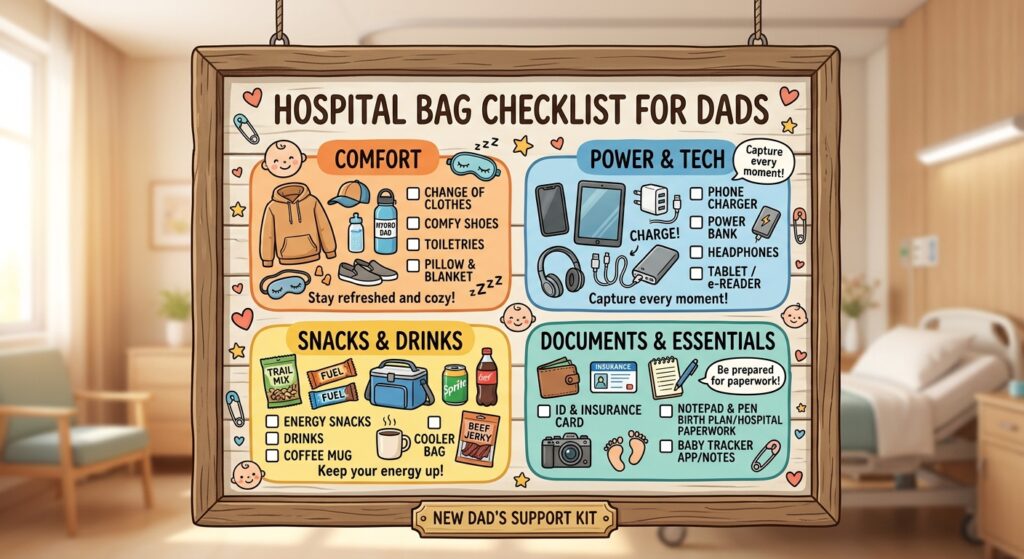
What to Pack in Your Hospital Bag Before Labor Starts
Whether you’re planning a trendy home birth with a doula, a calm water birth in a tub, or a regular trip to the hospital like most parents, you need to get ready ahead of time. Once the contractions start, there’s not much room left for clear thinking.
Start by putting together a hospital bag and stashing it somewhere easy to grab, like by the front door or in the trunk of your car. Not every item here applies to every family. Treat this as a starting point and build your own list from it.
Money and Paperwork
- Cash. Don’t wait until 3 a.m. on a Sunday to discover every ATM nearby is empty or out of service. You’ll want cash for small things like vending machine snacks, parking, or a cup of coffee at 4 a.m.
- A folder with your insurance card, ID, and any hospital paperwork. Most hospitals now let you pre-register online weeks ahead of your due date, so check your hospital’s website and knock that out early instead of filling out forms mid contraction.
- A short list of baby names if you haven’t settled on one yet. It happens more often than people admit.
Comfort Items for Mom
- A comfortable nightgown or robe, warm socks, a few changes of underwear, and slippers. Hospital gowns are not known for comfort or dignity.
- A swimsuit if she’s planning a water birth.
- Pain relief tools from your birthing class that actually seemed useful, like tennis balls, a heating pad, cold packs, or a rolling pin for counterpressure on her back. Fair warning, she may be tempted to use that rolling pin on you instead.
Tools for Labor and Waiting
- A way to time contractions. A watch with a second hand still works, but a contraction timer app on your phone is easier and does the math for you.
- Any birth and infant care books or notes from your birthing class that you might want to reference while you wait.
- Something to read for yourself. Labor can take a long time, especially with a first baby, so bring a book, download a few podcasts, or load up your phone with something that isn’t just doom scrolling.
Capturing the Moment
Your phone probably takes better photos and video than a dedicated camera at this point, so make sure it’s charged and bring a charging cable or a portable battery. Whether you film the actual delivery is completely up to you and your partner. Plenty of dads skip that part, and that’s a perfectly normal choice. Just don’t forget to take pictures once the baby actually arrives, since that’s the part everyone will actually want to see.
Personal Items for an Extended Stay
- Contacts, glasses, makeup, shampoo, and anything else either of you needs for a stay that could run a couple of days.
- A phone charger, because hospital rooms never seem to have enough outlets within reach.
- A list of people to call once the baby arrives. They’ll want to hear from you directly, not find out through a group text three days later.
Before You Head to the Hospital
Get the infant car seat installed in your car well before your due date, not on the drive there. Every state requires one for the ride home, and getting it installed correctly matters more than most new parents realize. The NHTSA’s car seat installation guide is worth ten minutes of your time, and many fire stations and hospitals offer free installation checks if you want a second set of eyes on it.
While you’re at it, make a spare set of house and car keys and toss them in the hospital bag too. Fumbling around for keys at 2 a.m. with a newborn in your arms is not how you want to start this chapter.
Doula support has been climbing steadily over the past couple of decades as more parents look for extra support during labor, so if that’s part of your plan, you’re in good company. Whatever route you take to bring your baby into the world, the prep work now buys you a lot of peace of mind later.
Last piece of advice. Relax. Enjoy it. The fun is about to begin.