It’s not a shot your pediatrician just hands you
If your kid has never heard of yellow fever, that’s normal, most American families never come across it. This isn’t part of the regular childhood vaccine schedule. It only matters if you’re headed somewhere yellow fever actually exists, meaning certain countries in Africa and South America. So before you panic about a vaccine you’ve never heard of, take a breath. Nobody’s requiring this for daycare or kindergarten.
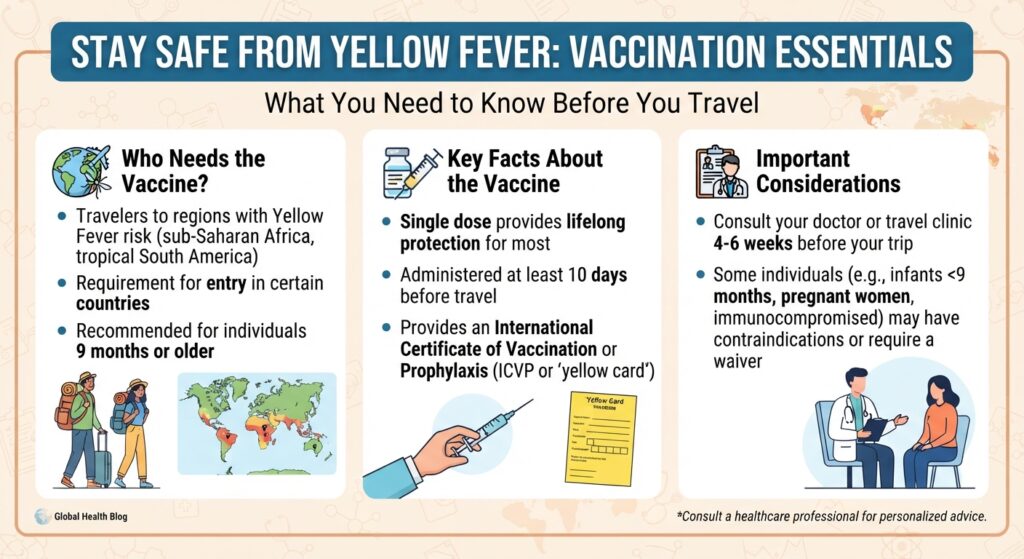
The CDC’s yellow fever vaccine page lays it out clearly. It’s recommended for people nine months or older who are traveling to or living in areas where the virus is a real risk. That’s it. If your trip is to Paris or Tokyo, this one’s a non issue. If you’re planning a safari in Kenya or a trip through the Amazon, it’s worth a conversation.
Some countries actually require proof of vaccination just to let you in, especially if you’re arriving from a place where yellow fever is already circulating. That’s not a suggestion, it’s a border rule, and travelers get turned away over it. A travel clinic can tell you exactly which countries on your itinerary fall into that category, since the list changes and depends on your exact route.
How it’s actually given
One dose. That’s usually all it takes, and it protects most people for life. No booster shots every few years, no annual reminders. The catch is timing, you need to get it at least ten days before you travel for it to count on your official vaccination certificate, and honestly you want that buffer anyway in case your child has any reaction.
There are exceptions worth knowing. Babies under six months shouldn’t get it at all, and infants between six and nine months only get it in unusual situations, so this really isn’t a baby vaccine in most cases. Kids with severe egg allergies, weakened immune systems, or certain other health conditions might need to skip it too, which is exactly why this is a conversation for your doctor or a travel medicine clinic, not something to decide from a blog post. They’ll look at your child’s age, health history, and exact destination before making a call.
It’s also worth remembering how vaccines work in the first place, since a lot of parents assume a live vaccine like this one behaves the same as a flu shot. It doesn’t, and that’s part of why the eligibility rules are stricter.
What to expect afterward
Most kids handle it fine. The common reactions are mild, think headache, sore muscles, or a low grade fever for a day or two, similar to what you’d see after a lot of routine shots. Serious reactions are rare, but your provider will walk you through warning signs to watch for, especially in very young kids or anyone with underlying health issues.
If you’re already researching travel vaccines, don’t stop here. Depending on where you’re headed, your doctor might also bring up the rabies vaccine, particularly for trips involving rural areas or a lot of animal contact. Travel vaccines tend to come in clusters depending on the destination, so one appointment often covers more than just yellow fever.
The bottom line here isn’t complicated. This vaccine exists for a specific kind of trip, not for everyday life. If that trip is on your calendar, talk to a travel clinic early, ideally a few weeks out, so there’s time for the shot to take effect and for any questions about your child’s specific situation to get answered properly.