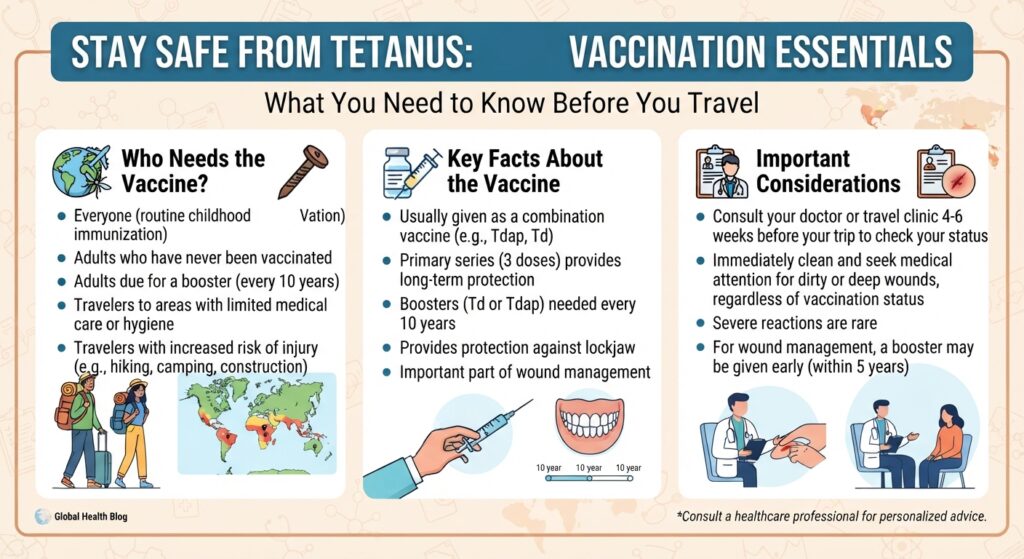
Tetanus isn’t something most of us think about until we step on a rusty nail. But the truth is a little scarier than that old wives’ tale suggests. Tetanus comes from bacteria in soil and dust, and it gets into the body through cuts, scrapes, even splinters. Once inside, it releases a toxin that causes painful muscle stiffness and spasms, sometimes bad enough to affect breathing. There’s no cure once symptoms start, only supportive care. That’s the whole reason the vaccine exists, and why pediatricians bring it up so early and so often.
The good news is you don’t have to think about any of that very much, because the vaccine handles it. Your child gets protection folded into the same shot that covers diphtheria and whooping cough. It’s not a standalone jab. If you want to know more about the other piece of that combo, there’s a good rundown on the diphtheria vaccine and why it rides along with tetanus protection.
How the schedule actually works
For babies and young kids, it’s called DTaP, and it protects against diphtheria, tetanus, and pertussis all at once. The CDC recommends a dose at 2 months, another at 4 months, another at 6 months, then a fourth sometime between 15 and 18 months, and a fifth right before kindergarten, between 4 and 6 years old. That’s five shots total in the early years, which sounds like a lot until you remember they’re spread out over half a decade.
Once your kid hits 11 or 12, the formula switches names to Tdap. Same idea, smaller doses of the diphtheria and pertussis parts, and it’s the version preteens and teens get as a booster. After that, adults are supposed to get a Td or Tdap booster every 10 years to keep protection topped up. Pregnant women get an extra Tdap dose during each pregnancy too, usually between 27 and 36 weeks, so newborns get some borrowed protection before they’re old enough for their own first shot. If any of that timing feels confusing for your own family, your pediatrician can map it out based on your kid’s actual record.
If you’re curious about the bigger picture, like why vaccines are given as a series instead of all at once, it helps to understand how vaccines work in general before zooming in on any one of them.
What to expect afterward
Most kids do fine. The most common thing you’ll see is soreness or redness right where the shot went in, and honestly that’s true for adults too. Some kids get a low fever, feel a bit more tired than usual, or are fussier for a day. Loss of appetite happens sometimes. None of that usually lasts more than a day or two, and it tends to be milder with each dose as kids get older. Serious reactions are rare. Parents often ask their doctor whether a little infant fever medicine is okay to have on hand for after the appointment, which is a perfectly reasonable thing to plan for.
None of this is meant to tell you what to decide for your own child. Every family’s situation is a little different, and your pediatrician knows your kid’s health history in a way no article can. For the full clinical rundown straight from the source, the CDC’s page on tetanus vaccination lays out the current guidance in detail. Bring your questions to your next appointment. That’s what the fifteen minutes with your pediatrician is for.