By KidsDirect Editorial Team
Almost every kid gets a stomach bug at some point, but rotavirus is a different animal in infants. It can cause days of watery diarrhea and vomiting severe enough to land a baby in the hospital with dehydration. Before the vaccine existed, that was a routine story in pediatric emergency rooms every winter.
What Is Rotavirus?
Rotavirus spreads easily, especially among infants and toddlers who put everything in their mouths. It shows up as sudden vomiting followed by watery diarrhea that can last close to a week. The bigger danger isn’t the virus itself. It’s how fast a small baby can become dehydrated from fluid loss, and that’s what drives most hospital visits.
The Vaccine Schedule
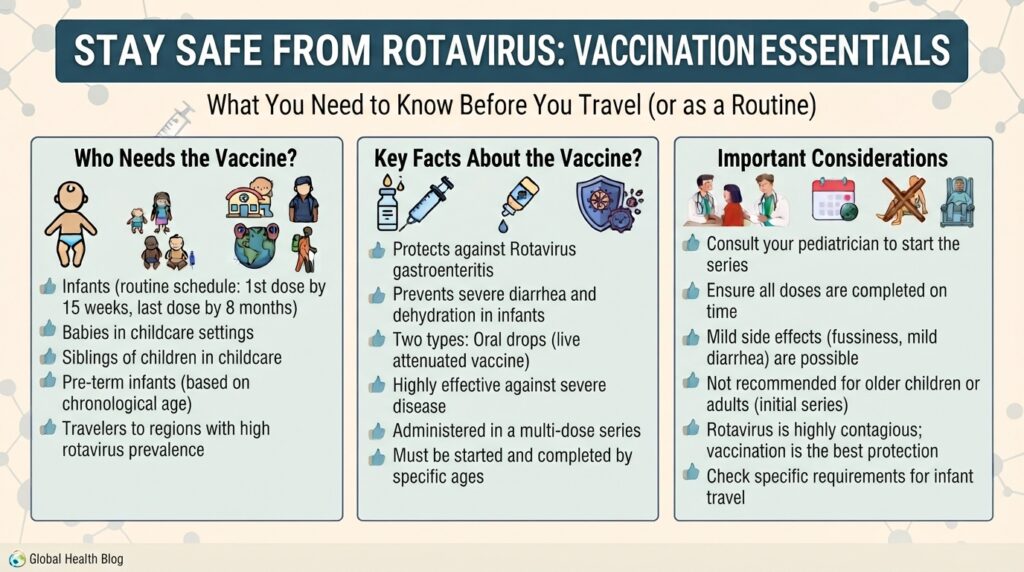
Unlike most of the schedule, this one isn’t a shot. It’s given as oral drops, and the exact schedule depends on which brand your pediatrician uses. RotaTeq is given in three doses at 2, 4, and 6 months. Rotarix uses two doses, given at 2 and 4 months.
Timing matters more here than with most vaccines. The first dose needs to happen before 15 weeks of age. The full series has to wrap up by 8 months too, since the vaccine hasn’t been studied for safety in older infants starting it for the first time.
Possible Side Effects
Most babies take the drops without any issue. Mild irritability or a bit of temporary diarrhea and vomiting after a dose are the most common reactions. There’s also a rare but real risk of intussusception, a type of bowel blockage. It shows up in roughly 1 out of every 20,000 to 100,000 vaccinated infants within a week of the first or second dose. Doctors watch for this closely. It’s worth mentioning to your pediatrician if your baby has severe belly pain, a lot of crying while pulling up their legs, or bloody stool in the days after a dose.
Once vaccinated, roughly 9 out of 10 babies are protected from severe rotavirus illness, and most of the rest still get some protection against a milder case.
This is one of the vaccines that’s easy to overlook since it’s not the disease most parents grew up worrying about. See where it fits in the bigger picture on our full vaccine timeline.