Why Typhoid Even Comes Up
Typhoid isn’t something most American kids will ever be vaccinated against, and that’s fine, it’s not part of the routine childhood schedule here. It only really comes up when a family is planning a trip somewhere the bacteria that causes it, Salmonella Typhi, is still hanging around in food and water supplies. Think parts of South Asia, sub Saharan Africa, and some areas of Latin America. If you’re visiting friends or relatives abroad, or heading somewhere off the usual resort track, your pediatrician or a travel clinic might bring it up. It’s the same general idea as the cholera vaccine, another one that only matters once travel is on the table.
Typhoid spreads through contaminated food and water, and it can make a kid seriously sick with high fever, stomach pain, and exhaustion that drags on for weeks if untreated. Nobody wants that mid trip, or after.
Two Ways to Get It, Shot or Capsules
Here’s where it gets a little different from most vaccines your child has had. There are two typhoid vaccine options in the US, and they work in pretty different ways.
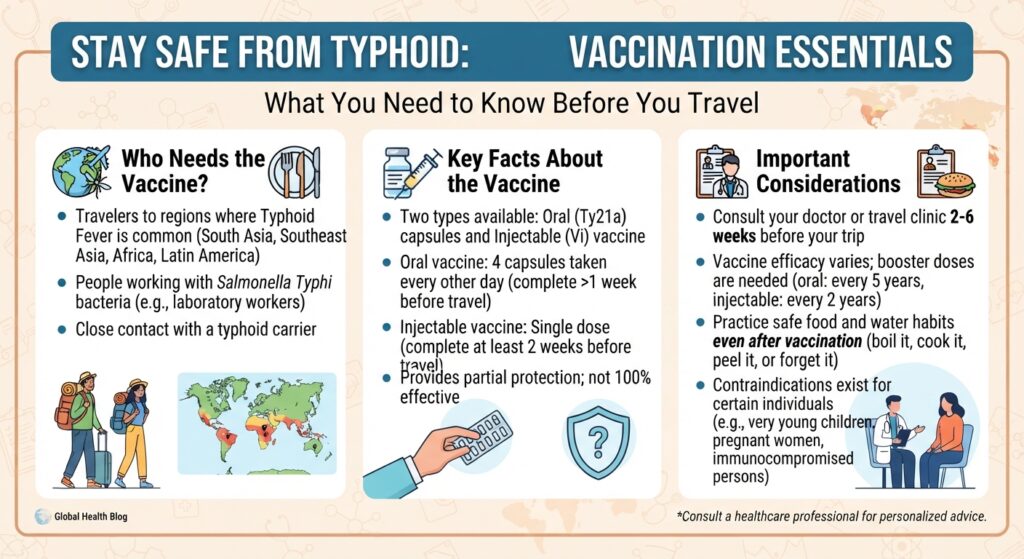
The shot version is called ViCPS, brand name Typhim Vi. It’s a single injection, given at least two weeks before travel, and it’s approved for kids age 2 and up. One and done, at least for that trip.
Then there’s the oral version, Ty21a, sold as Vivotif. This one is live and attenuated, meaning it uses a weakened form of the bacteria to train the immune system, similar in concept to how vaccines work more broadly. It comes as four capsules, taken every other day, finished at least a week before potential exposure. It’s only approved for kids 6 and older, and the capsules need to stay refrigerated and be swallowed with a cool drink about an hour before eating. That’s a lot of moving parts for a family to manage, so plan ahead if this is the route you’re considering.
Neither one is a guarantee. Both only protect somewhere in the 50 to 80 percent range, so even a vaccinated kid still needs the boring but effective basics, bottled water, cooked food, and washed hands.
Side Effects Are Usually Mild
Most kids tolerate either version just fine. With the shot, you might see a sore arm, a mild headache, or a low fever for a day or two. With the oral capsules, some kids get a bit of a stomachache, nausea, or loose stools, generally minor and short lived.
If your child is due for a booster because you travel to typhoid areas regularly, the shot needs repeating every 2 years and the oral version every 5 years. Worth jotting down somewhere so it doesn’t sneak up on you before your next trip.
None of this is meant to tell you what to decide. Every family’s travel plans and every kid’s health history are different, so the real move is a conversation with your pediatrician or a travel medicine clinic well before you leave, ideally four to six weeks out if you can swing it. They can walk through your specific itinerary and figure out what actually makes sense for your child. For the full rundown straight from the source, the CDC’s typhoid and paratyphoid fever travel guidance is a solid place to start.