KidsDirect

Tag: Vaccines

Vaccine Additives

By KidsDirect Editorial Team Every vaccine label lists a handful of extra ingredients beyond the actual germ fragment doing the work. None of them are there by accident. Preservatives keep bacteria from growing in the vial. Stabilizers keep the vaccine effective through shipping and storage. Adjuvants help the immune system respond more strongly, and trace antibiotics are sometimes left over from how the vaccine was made. Every one of these shows up in tiny amounts. A couple of them, thimerosal and aluminum in particular, get more attention than the rest. Here’s what’s actually going on with each category. Antibiotics Antibiotics
Read More

Two Main Types of Vaccines

Live, attenuated vaccines Live vaccines are made from live viruses that have been grown under special laboratory conditions so they are weakened, or attenuated, and thereby do not cause the symptoms or complications of the disease. But they do produce immunity, because the live vaccine virus displays the same special markers on its outer surface as the wild-type virus. When the live vaccine virus enters the body and begins replicating itself, the immune system jumps into action. Each component of the immune system does its part to process and destroy the antigen, and memory cells develop to guard against the next invasion of

Read More

How Do Vaccines Work?

The Immune System Analogies are powerful. A good analogy is useful for illustrating a point. But sometimes people overextend or read too much into analogies, often ending up far from the truth. When talking about the immune system, a lot of people use words like “weak” or “strong.” It is fine to use these descriptions that make the immune system sound like a muscle, but we should not take this analogy too far. A muscle atrophies if not used; the immune system does not. A muscle becomes exhausted by overuse; the immune system does not. It is more useful, and more

Read More
Vaccines in General

Vaccines and Immunizations

By KidsDirect Editorial Team Vaccinations during those early years are one of the most reliable ways to protect your baby from serious illness. The American Academy of Pediatrics, the American Academy of Family Physicians, and the CDC’s Advisory Committee on Immunization Practices all recommend a series of vaccines during the first two years. That list has actually grown since your own parents were filling out shot records. Below is a plain language walk through of what each one covers. This is about baby vaccines. For the full current schedule with exact ages, our vaccine timeline lays it out visit by

Read More

Vaccines

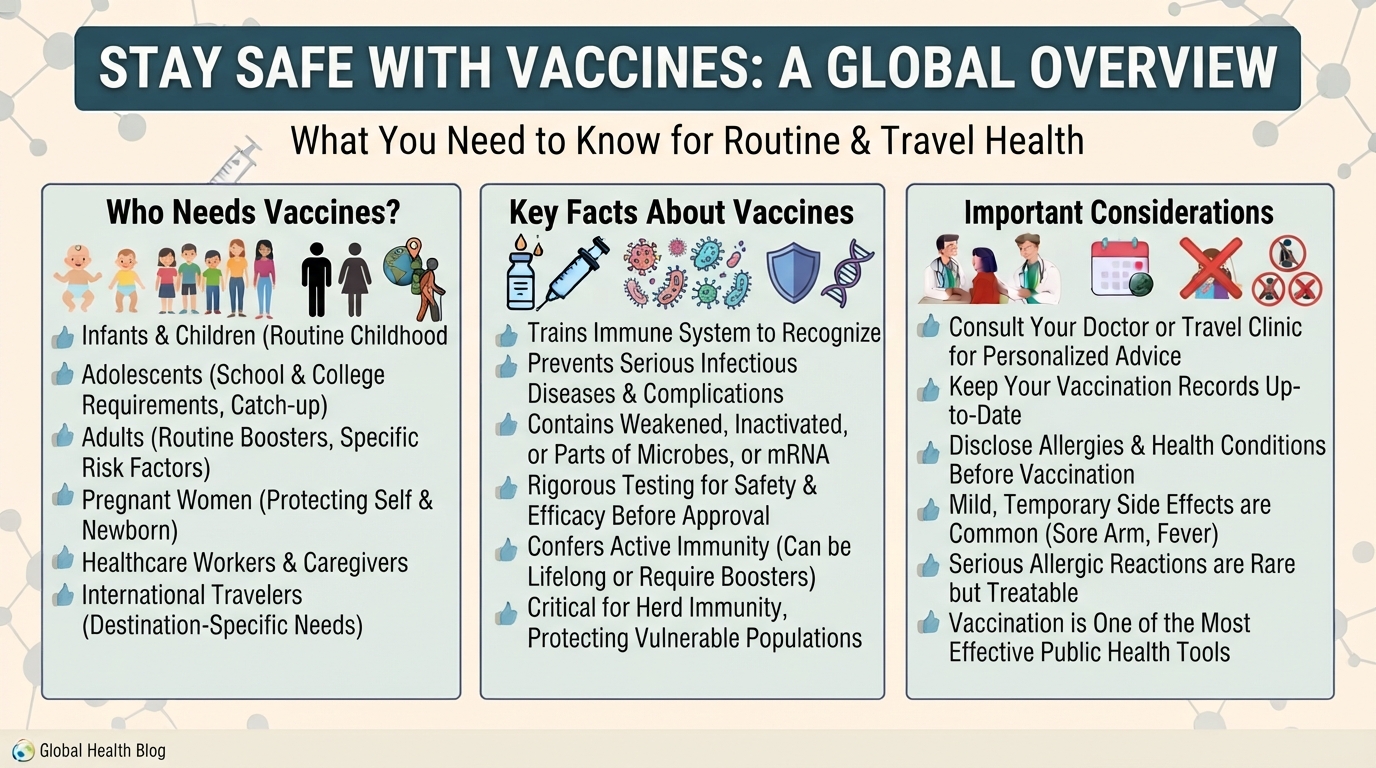
Vaccines work by teaching your child’s immune system to recognize a specific germ before it ever causes a real infection. Some do this with a weakened or inactivated version of the virus or bacteria, and others use just a piece of it, like a protein, so the body can build defenses without getting sick first. That’s the difference between a prophylactic vaccine, which prevents a disease before exposure, and a therapeutic one, which treats a disease that’s already present. Almost every childhood vaccine on the schedule below is prophylactic. If you’d rather watch than read, this short video walks through

Read More