By KidsDirect Editorial Team
Getting Your Child Ready for Kindergarten
Most kids walk into kindergarten having already spent time away from home. In 2022, about 84 percent of five year olds and 47 percent of three and four year olds were enrolled in school, according to the National Center for Education Statistics. Plenty of children have been through preschool or child care by September. The move to the big school goes smoothly for many of them. Some kids take a little longer to settle in. That’s fine. A bit of wariness around new people and places is a healthy instinct, and it usually fades once the faces and routines become familiar. Here’s how to get ready before the first day. We’ll also cover the nerves that tend to show up, and how to tell when it’s more than jitters. This is all about getting ready for kindergarten
Find Out What the School Expects
Start early, ideally well before the summer winds down. Registration, immunization records, bus routes, and snack or lunch plans all take longer than you’d think. Only 17 states and the District of Columbia require kindergarten, according to the Education Commission of the States. Check what your own state and district call for. Our vaccine guide can help you sort out the shots your child may need before school starts.
Then ask the school what teachers expect from new kindergartners. Do they need to know their address and phone number? Should they be able to zip a jacket or tie their shoes? Many schools send home a welcome packet at registration, and most will share one earlier if you call. You can also ask for a short meeting with your child’s likely teacher. If you’re still weighing options, our recommendations for choosing a school may help.
Visit Before the First Day
A quick trip to the school can take a lot of the mystery out of it. Walk the hallways together, peek into a classroom, find the bathrooms, and look at the playground. If you can say hello to the teacher, even better. This kind of casual visit helps a child who hasn’t spent much time in a big group. It makes the whole thing feel manageable for both of you. It’s a bit like driving the route to a new job the weekend before you start.
A friendly face helps too. Invite a neighbor who’s starting the same school, or an older child who’s already been through it, over for a play date. A buddy makes the place feel less strange. If your child hasn’t spent many afternoons away from you, try a few short visits to a friend’s house over the summer. Those small practice runs build the confidence to cope on their own.
Talk About What’s Ahead, Without Overselling It
If your child seems relaxed about starting school, keep your own tone relaxed too. Answer questions as they come up and chat about what a typical day might look like. The American Academy of Pediatrics suggests talking with your child about school and checking in with their preschool teacher for an honest read on how they’re doing. Face to face time at home matters more than educational apps, so don’t feel you need to cram.
Try not to promise that kindergarten will be nonstop fun. For some kids it is. For most, a large building full of strange children and adults brings at least a little upset. A simple line works well. You might say, “You’ll make new friends and do lots of great things. There will probably be moments when you wish you were home.” Kids who hear that ahead of time aren’t thrown when those moments arrive. It’s the same idea as knowing a hill is coming before you start climbing it.
When your child heads out the door, skip the “Are you okay?” That question plants the idea that something might be wrong. Try something like “I know you’ll get the hang of it in no time” instead. And if your child is wildly excited, gently take the edge off. Sky high expectations can crash hard on a tough day.
Practice the Little Stuff
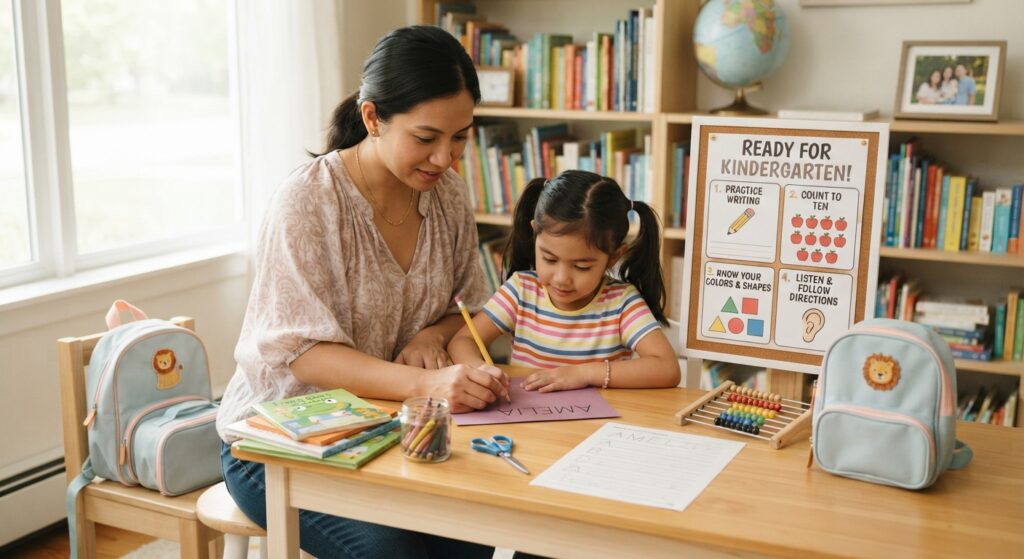
Kindergarten asks for more independence than preschool did. Teachers have more kids to look after, so one on one attention is harder to come by. Kids are also expected to handle more on their own. Practice buttons, zippers, and putting on a coat. Run through bathroom routines. Talk about how lunch works and where the backpack goes. Kids who feel sure about these small things have more energy left for the big stuff. That means making friends and learning classroom rules.
Some children also want to know the practical details. Where do I get dropped off? Who meets me there? Who picks me up? A relaxed talk about these questions, and even a rehearsal or two, can settle a lot of worry. Kids rarely lose sleep over curriculum. They worry about the bus, the bathroom, and where to hang their coat.
When Your Child Feels Uneasy
If your child is nervous, it helps when you trust that the school is a caring place. Your confidence rubs off. You can tell your child that the adults there will understand how they feel and help when things get hard. Kids pick up on a parent’s worry quickly, and some will act in ways that bring extra reassurance, or even a change of plans.
Don’t try to talk the feelings away. Accept them, and let your child know it takes time to get used to new people, places, and rules. Then move on. Skip the bribes too. Promising a treat for a calm goodbye can send the message that there’s something to be upset about. Say you’re sure your child will adjust. Let them know you’re always ready to listen when they want to talk about their day.
Your Own Nerves Count Too
Starting school stirs up feelings in parents. You might worry about the quality of the teaching. The first day might also bring back your own rough memories of school. Maybe your family’s background wasn’t treated with much care when you were a student. These feelings are common. If you’re uneasy about the school itself, volunteer in the classroom, join a parent meeting, and ask questions about how things are taught. Many parents find that getting involved settles their worries. It also helps to talk with a neighbor or friend who already has a child in that school, or to visit together.
If your questions don’t get satisfying answers and you don’t have other options, put your energy into what you can control. Tell your child you’re glad to help with anything, and keep the lines of conversation open. You can find more articles on the topic in our preschool and school sections.
When It’s More Than Jitters
Some separation anxiety is normal, especially if your child hasn’t spent much time in groups. Crying at drop off, clinging, and shyness usually ease up over a few weeks. Sometimes the signs look different. Frequent tantrums, stomachaches, headaches, or sore throats can show up on school mornings. They ease once your child is allowed to stay home, then come back the next day. Kids can also dread going back after a long break like summer vacation. They may worry about keeping up in class or getting along with other kids. Many parents can help by talking through those fears.
True school refusal is less common. The Anxiety and Depression Association of America says it affects 2 to 5 percent of school age children. It shows up most often around ages five and six, and again around ten and eleven. If your child keeps refusing to go, or the physical complaints don’t let up, call your pediatrician. Getting help early matters, and these fears respond well to treatment. A professional can also help rule out a real illness.
The Short Version
You don’t need a perfect plan. Find out what the school expects, visit if you can, practice the small independence skills, and keep your tone calm and matter of fact. Expect a few wobbly moments and treat them as part of the adjustment. A child who knows you believe in them is in good shape for whatever kindergarten brings. So is one who can talk to you about the hard parts.