Pregnancy runs 40 weeks, split into three trimesters, and full term means making it to at least 37 weeks. A baby born before that is considered premature, and premature babies can face real challenges with breathing, digestion, and growth, which is a big part of why so much of prenatal care is about buying your baby as much time as safely possible.
Here’s the part that confuses almost everyone at first. Pregnancy is counted from the first day of your last period, not from conception. That means by the time you actually conceive, you’re already considered about two weeks pregnant, even though there was no baby yet. It’s a strange system, but it’s the one your doctor’s office, your due date calculator, and this page all use, so it’s worth just accepting rather than fighting. Our Your Pregnancy, Month by Month guide covers this same stretch broken into monthly chunks if you’d rather read it that way.
Fetal Development
Week 2
This is roughly when fertilization actually happens. Sperm meets egg in the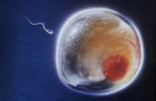 fallopian tube, and that single cell starts dividing almost immediately, combining 46 chromosomes that will determine everything from eye color to blood type. About a day and a half later, the dividing embryo drifts out of the fallopian tube toward the uterus. Every so often it doesn’t make that trip and implants in the tube instead, which is what causes an ectopic pregnancy, a real medical emergency rather than a normal variation.
Week 3
The embryo has reached the uterus and is looking for a good spot to settle in, then burrows into the uterine lining once it finds one. It’s still barely a sixth of an inch long, but a lot is already underway. The backbone, spinal column, and nervous system are starting to form, and so are the kidneys, liver, and intestines.
Week 4
This is usually around when a missed period tips you off that something’s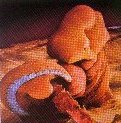 different, since the developing embryo is already producing hormones that pause your cycle. At this stage it’s called a blastocyst, a fluid filled cluster of cells attached to the uterine wall. One half becomes the placenta, the support system that will feed your baby for the rest of the pregnancy, and the other half becomes the baby itself. A sheet of cells along its back folds into a tube that will become the spinal cord, with one end already enlarging into what will be the brain.
Week 5
Your baby is about the size of a raisin now. Small folds low on the sides of the head mark where ears will eventually form, and every major organ system has at least started, even though none of them are close to finished. The placenta is now functioning enough to start passing along nourishment and oxygen through the umbilical cord. The spine is growing faster than everything else at this point, which gives the embryo a brief tail like appearance that disappears as the rest of the body catches up.
Week 6
Around day 26, a tiny heart starts beating for the first time. Your baby is about a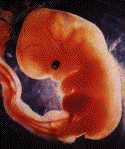 quarter inch long. The kidneys and liver are underway, and the neural tube connecting brain and spinal cord closes up. This is also roughly when a lot of people start feeling early pregnancy symptoms firsthand, nausea, fatigue, sore breasts, and needing the bathroom constantly.
Week 7
Hands and feet look like little paddles right now, though fingers are just starting to show. The heart has split into left and right chambers and is beating around 150 times a minute, close to double an adult’s resting rate. A mouth, tongue, and the beginnings of eyes with a retina and lens are visible, and your baby is already practicing movement even though you can’t feel it yet.
Week 8
From here on your baby is officially called a fetus rather than an embryo. Floating in the amniotic sac, it’s about three quarters of an inch long, with arms and legs stretching out and a head that looks oversized simply because the brain is growing so fast. Brain activity can already be measured. Teeth, the palate, and the larynx are starting to form, and the skin is thin enough that you’d be able to see veins right through it.
Week 9
Constant motion is the theme this week, even though it’ll be a while before you can actually feel any of it. Organs, muscles, and nerves are all in place and starting to switch on. Fingers and toes are shedding their webbed, paddle like shape, and tiny touch pads are forming on the fingertips.
Week 10
Your baby weighs about a third of an ounce now, with a heart that’s nearly as developed as a newborn’s. A bypass valve keeps most blood away from the still unused lungs, since oxygen is still coming through the placenta. Eyelids have fused shut and will stay that way until around week 27. Wrists, ankles, fingers, and toes are all clearly visible, and external genitals are forming, though it’s still too early for an ultrasound to tell you the sex.
Week 11
The big internal organs, liver, kidneys,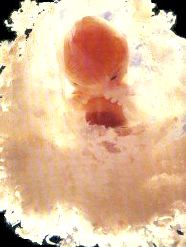 intestines, brain, and lungs, are fully formed and beginning to function, even though your baby is only about 2 inches long and weighs less than half an ounce. The head still takes up close to half the total body length at this stage, and your baby is busy moving and kicking, out of sight for now.
Week 12
Vocal cords are complete, so your baby can technically cry, just silently, with no air in the lungs yet to make sound. The brain is fully formed enough that your baby can feel pain, and thumb sucking sometimes starts around now. Fingernails and toenails are forming, hair is appearing on the head, and the kidneys are developed enough to start producing urine.
What tests will my doctor run during the first trimester? →
The first trimester asks a lot of your body before there’s much to show for it, which is exactly why it can feel so disorienting. Once you’re through it, our Second Trimester guide picks up where this one leaves off, and our nutrition guide is worth revisiting regularly since what you need shifts as pregnancy goes on.
Sources: