By KidsDirect Editorial Team
Bathing Your Baby
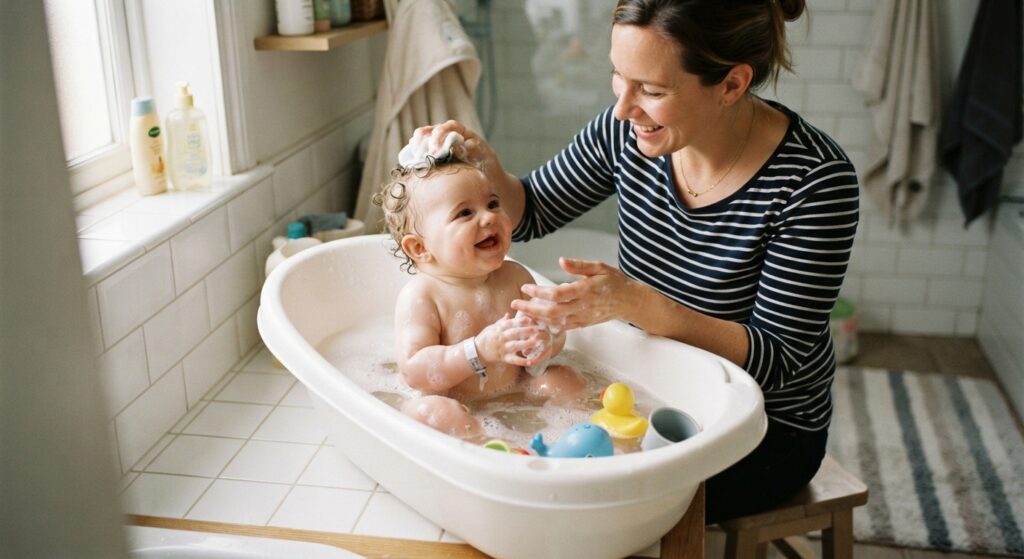
Washing a brand new baby can feel like handling something breakable. Newborns really are slippery and a little fragile those first few weeks. Most parents get the hang of it fast though. Your baby might fuss through the first few baths, then start genuinely enjoying bath time within a few weeks. Here’s what you need to know, from the first sponge bath through the first real dunk in the tub. This is all about bathing your baby.
Sponge Baths Until the Cord Falls Off
Stick to sponge baths for the first couple of weeks. Keep this up right until your baby’s umbilical cord stump dries up and falls off on its own. A full tub bath before then raises the odds of infection around the cord site. Lay your baby on a towel and undress them. Wipe them down section by section with a warm, damp washcloth instead of submerging them in water. Your baby may protest the whole process at first. That’s normal, and it tends to fade fast. Once the cord falls off, usually somewhere between one and three weeks, you’re clear to move on to real baths.
How Often Does Your Baby Really Need One
Newborn skin doesn’t need daily washing. In fact, too much bathing can dry it out. Most pediatricians suggest three baths a week for the first year is plenty, unless your baby gets visibly dirty or has a diaper blowout that needs more than a wipe down. A baby with dry skin or one who sleeps most of the day can often get by on just one or two baths a week. Bathing your baby in hot weather might need one daily. Let your baby’s skin and your own common sense guide the schedule, not a strict rule.
Setting Up the Tub
A baby bathtub or a clean plastic dishpan works well for the first several months. The regular bathtub becomes an option once your baby can sit up with support, usually around six months. Fill the basin with about two to three inches of lukewarm water, never hot. Test it with your elbow or the inside of your wrist rather than your hand. Fingertips are less sensitive to temperature than you’d think. Have a towel, a washcloth, and whatever soap or shampoo you’re using within arm’s reach. Get this ready before your baby goes anywhere near the water.
Washing From Top to Bottom
Lower your baby into the water slowly. Keep one hand supporting their head and shoulders at all times while you wash with the other. Work from the top down. The neck folds, armpits, and creases behind the knees and elbows collect lint and spit up fast. They’re also the spots most prone to rash, so give them extra attention. A gentle, fragrance free shampoo once or twice a week is plenty for a baby’s hair. A thorough rinse with the washcloth afterward keeps any residue from irritating the scalp.
Clean the face with plain water and no soap. A baby’s eyes and skin are sensitive enough that soap residue there can sting. Rinse the eyelids gently with fresh water, and wipe the outer ear with a washcloth only. Skip cotton swabs entirely. They push wax further into the ear canal instead of removing it, and they carry a real risk of injuring the eardrum if your baby moves suddenly. Save the diaper area for last. A mild, fragrance free baby soap or just plain water works better here than an antibacterial soap. Antibacterial soap isn’t necessary for a healthy baby and can be harder on delicate skin. For boys, gently lift the scrotum to clean underneath it. For girls, always wipe front to back. This helps keep bacteria away from the urinary tract.
A Few Safety Basics Worth Repeating
Never leave your baby alone in the water, not even for the few seconds it takes to grab a forgotten towel or answer the door. Babies can drown in a shockingly small amount of water, and it happens silently. Keep the water warm rather than hot. Always test it before your baby goes in. If the phone rings or someone knocks, your baby comes out of the tub with you, or the call waits. Bathing your baby can be fun.
After the Bath
Pat your baby dry rather than rubbing. Pay extra attention to those same skin folds so moisture doesn’t linger there. Lotion is fine starting around three to four weeks old, as long as it’s a fragrance free option your pediatrician is comfortable with. Warming the bottle in a bit of warm water before you start can make the whole thing more pleasant for your baby. Skip baby powder altogether. Both talc and cornstarch versions can irritate a baby’s lungs if inhaled. Most pediatricians now recommend leaving it out of the routine entirely instead of swapping one powder for another.
Bath time gets easier fast, and most babies end up loving the water once the early jitters wear off. If redness, odor, or discharge shows up around the healing umbilical cord, call your pediatrician rather than waiting it out. If a rash shows up anywhere else, our Diaper Rash Decoder can help you figure out what you’re dealing with.