By KidsDirect Editorial Team
Perineal Care After Birth
Your perineum is the area between your vagina and your rectum. It does a lot of work during a vaginal delivery. Most new moms are surprised by just how sore this area feels afterward. Postpartum perineal care covers everything you can do to help it heal, feel less painful, and stay infection free. Plan on giving it real attention for one to three weeks, and in some cases a little longer.
Why It’s So Sore
The perineum stretches enormously as your baby moves through the birth canal. That stretching alone can leave it bruised and swollen. Sometimes a doctor also makes a small cut called an episiotomy to keep the area from tearing on its own. Natural tears happen often too, with or without a cut. Either way, the tissue gets stitched back together, and stitches take real time to heal.
What You Might Notice
Pain and swelling around the vagina are completely normal in the days right after delivery. You’ll also notice vaginal discharge called lochia, which changes color as healing progresses. It starts out bloody, fades to pink, then turns yellowish before it tapers off. If you had a tear or an episiotomy, you may be able to feel the stitches with light touch. You shouldn’t be in sharp pain though. Hemorrhoids are common too, since pushing during labor puts real strain on the blood vessels around the rectum. A hemorrhoid is a swollen vein that can ache, and sitting tends to make that ache worse. This is all about perineal care after birth.
Easing the Pain Right After Birth
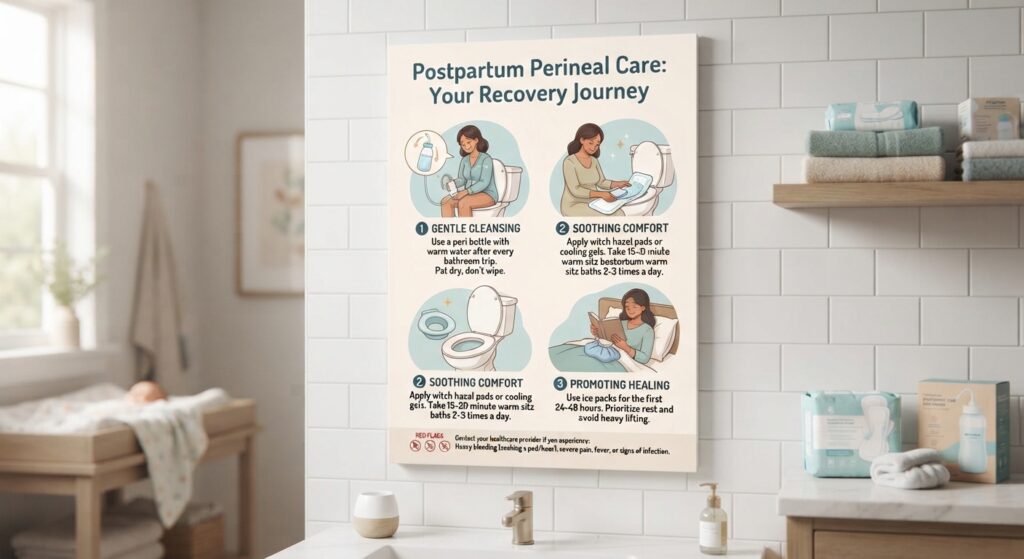
Ice packs or an ice sitz bath can bring quick relief in the first day or two. Your care team may also send you home with pain medicine. A numbing spray or witch hazel pads can help too, used on the area throughout the day. Ask about a stool softener as well. Straining during a bowel movement is one of the more painful parts of early recovery, and a softener makes a real difference.
A peri bottle is just a hand held squirt bottle, and it makes cleaning the area far more comfortable than wiping ever could. It helps lower your infection risk too. You’ll also want peri pads in your underwear to catch the discharge as it changes over the coming weeks.
Building Your Recovery Kit
Before you head home from the hospital, or before your due date if you’re planning ahead, stock up on a few essentials. Keep peri pads, a peri bottle, toilet paper or unscented cotton wipes, and an over the counter pain reliever like acetaminophen on hand. Add anything else your doctor specifically prescribes to that same spot. That way it’s easy to find at two in the morning.
Tracking Your Discharge
Keeping an eye on your lochia tells you a lot about how healing is going. For the first two to three days, expect a heavy, dark red flow. Passing some clots during this stretch is normal too. From around day three through day ten, the flow usually lightens and turns pink. After that, most women see a creamy or yellowish discharge for another one to two weeks before it clears up completely.
Keeping the Area Clean
Clean the perineal area every time you use the bathroom or change a pad. Fill your peri bottle with warm tap water. While sitting on the toilet, rinse for a minute or two, aiming the stream from front to back. Pat dry with toilet paper or a cotton wipe, moving front to back again. Put on a fresh pad, and stand up before you flush so you’re not caught by any splash.
Sitz Baths
A sitz bath during the first week or two can feel genuinely soothing. Fill the tub with a few inches of warm water, just enough to cover your hips. Sit for about ten minutes once or twice a day. Skip bubble bath or scented products, since they can irritate healing tissue. Put on a fresh pad once you’re done.
A Few More Things That Help
Drinking plenty of water and eating fiber rich foods helps keep constipation from adding to the discomfort. That matters just as much as any stool softener. Hold off on biking, jogging, heavy lifting, or anything else strenuous until your doctor gives you the go ahead at your follow up visit. The same goes for sex. Use pads rather than tampons while you’re healing and still bleeding. If you delivered by c-section instead, your recovery will look a bit different. Many of these same comfort measures still apply though, especially if you also had some vaginal tearing beforehand. A good overview of perineal repair care from Kaiser Permanente covers these steps in more depth if you want to read further. If you haven’t packed your hospital bag yet, our Labor Checklist covers what to bring for this part of recovery too.
Contact Your Doctor If
Call your doctor if your vaginal discharge gets heavier rather than lighter, if you’re soaking through a pad every hour or two, or if it turns bright red again after fading. A fever, pain in your abdomen, or a foul smell from the discharge are also reasons to call rather than wait it out. Trust your gut here. You know your body better than any general timeline does.