By KidsDirect Editorial Team
Attention Deficit Hyperactivity Disorder in Children
Plenty of childhood conditions slip under the radar. ADHD usually doesn’t, because it’s hard to miss in a classroom or at the dinner table. A child with attention deficit hyperactivity disorder may have a hard time staying focused, act before thinking, squirm in a seat, and leave a trail of unfinished projects. Parents and teachers often feel worried, and sometimes worn out. The encouraging part is that ADHD is well understood, it can be diagnosed reliably when the right steps are followed, and it responds to treatment. Here’s what you should know.
How Common Is It
More common than most people think. The CDC reports that about 7 million U.S. children ages 3 to 17, or 11.7 percent, have a current ADHD diagnosis, based on 2024 survey data. That’s roughly one kid in every nine. Boys are diagnosed more often than girls, about 13 percent compared with 7 percent. Part of that gap is likely because girls tend to be inattentive without much hyperactivity, so their struggles are easier to miss. About 60 percent of kids with ADHD have a moderate or severe case.
Many children with ADHD have other challenges alongside it. According to the CDC, nearly 78 percent have at least one more condition. Nearly half have a behavior or conduct problem, and about four in ten have anxiety. Depression, autism, and learning disabilities also show up often. If it’s left untreated, ADHD can affect a child’s friendships and schoolwork, and kids with it have higher rates of accidental injuries. Over time, some develop low self-esteem or depression.
What Causes It
Nobody did anything wrong to cause ADHD. It’s one of the most heritable conditions in childhood, with estimates of heritability around 70 to 80 percent. Most kids with ADHD have at least one close relative who has it too. Identical twins are far more likely than fraternal twins to share the diagnosis, which points strongly to genes. Genes aren’t the whole story, since things like premature birth and early exposure to toxins can also play a part.
Brain imaging studies have shown that, on average, the brains of children with ADHD develop and work a little differently, especially in areas that control attention and planning. Those differences show up in group averages, though. A brain scan can’t diagnose an individual child. Diagnosis still depends on a careful look at behavior.
Getting a Diagnosis
A good evaluation takes more than one short visit. The American Academy of Pediatrics guideline covers children from age 4 to 18. It calls for a clinician to rule out other explanations for the symptoms. It also asks them to screen for things like anxiety, depression, trauma, and learning problems. Symptoms need to show up in more than one setting, such as home and school. That’s why a thorough evaluation gathers input from both parents and teachers.
Be wary of a quick diagnosis from a single conversation. Without full information, it’s easy to over diagnose ADHD or to miss it altogether. If you’re not comfortable with what you’re hearing, it’s fine to ask for a second opinion. Our overview of the different types of learning disabilities can help you sort out what else might be going on.
Treatment That Works
The AAP treats ADHD as a chronic condition, which means ongoing care instead of a one time fix. For preschoolers ages 4 to 5, parent training in behavior management is the first line of treatment. For school age children and teens, doctors usually combine medication with behavioral approaches, along with supports at school. Behavioral help can include coaching on routines, rewards for small wins, and skills for making friends.
Stimulant medications, such as methylphenidate and amphetamine based drugs, are the most studied and the most commonly prescribed. Nonstimulant options exist too, for kids who don’t respond well to stimulants or who have troublesome side effects. Medication tends to work best for the core symptoms of inattention and impulsiveness. Adding behavioral support often improves things like social skills and schoolwork. Like all medicines, these have side effects, including poor appetite and trouble sleeping, so your doctor should check in regularly and adjust the dose when needed.
Many parents feel nervous about medication, and that’s understandable. Ask your child’s doctor to walk you through the benefits and risks. Don’t let myths decide for you. At the same time, the CDC reports that about 30 percent of children with ADHD receive neither medication nor behavior treatment. Most families do better with some kind of support than with none.
Working With the School
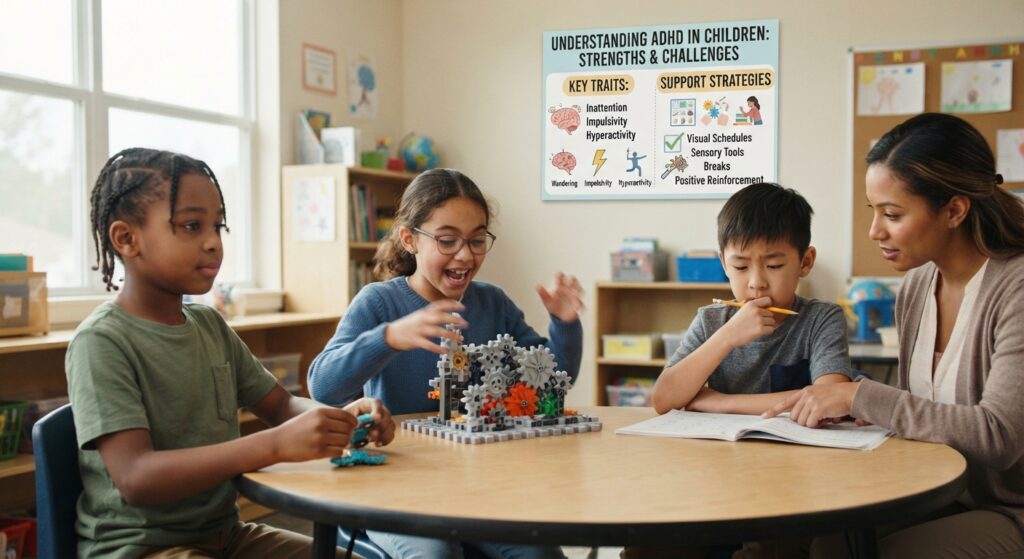
Treatment works best when home and school pull in the same direction. Ask for a team that includes you, your child’s teachers, the school psychologist, and your child’s doctor. Many children with ADHD qualify for supports through an Individualized Education Program or a Section 504 plan. These might include seating near the teacher, extra time on tests, or breaks to move around. Our learning disabilities guide explains how to request an evaluation and what to expect from the process.
Cost can be a real hurdle. Coverage for behavioral therapy and mental health visits varies from plan to plan, so call your insurer before you start and ask exactly what’s covered. If the school’s help falls short, keep pushing. You’re your child’s best advocate, and persistence usually pays off. You can find more advice in our school section.
What You Can Do at Home
Daily routines make a big difference. Keep a regular schedule for mornings, homework, and bedtime. Give one direction at a time, and break big jobs into small steps. Catch your child doing something right and say so, because kids with ADHD hear plenty of corrections already. Plenty of exercise, good sleep, and a calm place to do homework also help. Our article 12 Tips for Unorganized Kids has more ideas.
ADHD is a part of how your child’s brain works, and it’s no reflection on your parenting. With the right mix of support, kids with ADHD go on to do well in school, build strong friendships, and find careers where their energy and creativity shine.