By KidsDirect Editorial Team
Changing Diapers
Nobody puts diaper duty at the top of their parenting wish list. Somebody has to do it, though, and it’s a lot less scary than it looks. You’ll go through thousands of diapers in the first couple of years, so you’ll be an expert before you know it. Here’s what to know about technique, diaper choices, rashes, and a few tricks that save you a lot of laundry. This is changing diapers in babies.
The Basics Every New Parent Should Know
Start with a few simple habits. With a baby girl, always wipe from front to back. That keeps bacteria from the bowel away from the vagina and helps prevent urinary infections. With a baby boy, expect the occasional surprise. Cold air often sets off a spray, so lay a clean diaper or soft cloth over his penis as soon as you open the dirty one. When you fasten the fresh diaper, point his penis down. That helps keep leaks from sneaking out at the waistband.
Plan on a change every three to four hours, and after most feedings. If your baby still has the umbilical cord stump, fold the front edge of the diaper down so the stump can air out. Wash your hands when you’re done. And never walk away from a baby on a changing table, even for a second. Babies can roll sooner than you’d think.
You don’t need lotions or powders. Plain warm water or a fragrance free, alcohol free wipe does the job, and powder is something a baby can breathe in. Let your baby’s bottom air dry for a minute or two before you close up the fresh diaper.
What to Do About Diaper Rash
Most diaper rashes come from skin sitting too long in contact with pee and poop. The American Academy of Pediatrics says the best fix is to change diapers often and apply a thick layer of a barrier paste made with zinc oxide or petroleum jelly at each change. Choose a diaper that absorbs well, make sure it isn’t too snug, and give your baby some diaper free time whenever you can.
Most rashes clear up in a few days. Call your pediatrician if the rash hasn’t improved after two or three days of treatment, or if it gets worse. Also call if you see pimples, blisters, pus filled sores, or peeling skin, or if your baby has a fever. A bright red rash with spots at the edges is a common sign of a yeast infection, especially after antibiotics, and it needs a different treatment than a regular rash. Not sure what you’re looking at? Our Diaper Rash Decoder can help you sort out the common types.
Disposable or Cloth Diapers
One of the first decisions you’ll make is which kind of diaper to use. You’ve got two choices, and plenty of families end up using a bit of both.
Disposable Diapers
Disposable diapers come in sizes based on your baby’s weight, and the packaging tells you which one to buy. Their layers pull wetness away from the skin, which keeps your baby’s bottom drier and less likely to get irritated. Most fasten with tape tabs or Velcro style strips on the back panel that attach in the front.
When you’re done, fold the soiled diaper in on itself and toss it in the trash or a diaper pail. You’ll find disposables at grocery and discount stores. They cost more over time than cloth, but many parents find them more convenient. They’re also what most daycares expect.
Cloth Diapers
Cloth diapers come in woven cotton, terry cloth, or flannel. You can buy them flat or prefolded in different thicknesses. Many are held in place with safety pins, though you can also find Velcro style fasteners and diaper covers that keep everything where it belongs. One downside is that wetness stays against your baby’s skin, so you’ll want to change them promptly to avoid irritation. You’ll find cloth diapers at department and discount stores. Washing them yourself is the cheapest route. A diaper service costs more, but it delivers clean diapers to your door and picks up the dirty ones.
To clean a soiled cloth diaper, rinse it in the toilet first, then machine wash it in hot water, separate from your other laundry. Between washes, you can keep used diapers in a diaper pail. Flushable liners make cleanup much easier. If you like the idea of cloth, ask your daycare about it. In-home providers are often more open to it than larger centers.
Environmental Considerations
Both options have trade-offs. Washing cloth diapers uses water and electricity, and so does a diaper service, plus the truck that drives around to pick up and deliver. Disposables add to the garbage in our landfills. Studies comparing the two have landed on both sides, and a lot depends on how you launder and how many times each cloth diaper gets reused. So there’s no clear winner here.
Which One Is Best for Your Baby
There’s no single right answer. Pick what fits your baby, your family, and your schedule. Whichever you choose, keep a few cloth diapers around anyway. They make great burp cloths and last minute bibs.
How to Get Good at Changing Diapers
Nobody is an instant expert. Every baby has an opinion about the whole process, too. Some lie still, some wiggle, some kick and scream, and most do all three. A few habits make it easier.
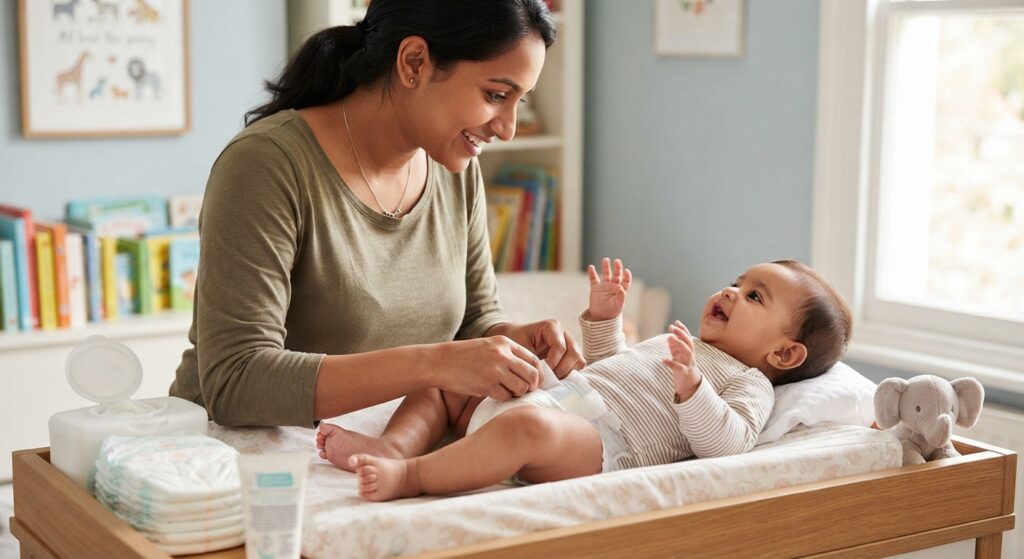
Get everything ready before you start. Keep clean diapers, wipes, ointment, and the diaper pail within easy reach so you never have to leave your baby’s side. Then make the most of the time. You’ll spend hours on the changing table in the first year, so talk, sing, and make silly faces. A diaper change is a built in chance to touch and connect.
Fit matters, too. With disposables, aim for snug but not tight. You don’t want to squeeze your baby’s tummy, but a loose diaper will leak no matter how pricey it is. With cloth and safety pins, keep your fingers between the pin and your baby’s skin. It’s better for you to get poked than your baby. Always check that the pin is locked, and add a diaper cover or waterproof pants for extra protection.
Diapers and Swimming
Ordinary diapers don’t belong in the pool. They soak up water, get heavy, and can fall apart. Choose a swim diaper or a baby swimsuit made for the water. Know that swim diapers aren’t a magic shield, though. The Centers for Disease Control and Prevention says they can hold in some waste, but they don’t keep germs out of the water. Change your baby in a changing area away from the poolside, check the diaper about every hour, and keep a child with diarrhea out of the water altogether.
Free Feeding and Diaper Log
It helps to jot down feedings and diaper changes in the early weeks. It also gives you real numbers to share at checkups. Grab our free log in either format.
Breastfeeding and Diaper Changing Records
Keep track of feedings and diaper changes in the early weeks.
Looking for more help with your new baby? Browse our BabiesDirect section for guides on feeding, sleep, and everyday care.